Why getting things done is so hard with ADHD, and what actually works
Motivation challenges are part of being human, but for people with ADHD, the struggle is wired much deeper. What looks like procrastination, laziness, or unreliability from the outside is often a neurobiological issue tied to dopamine — the chemical that fuels motivation, focus, and reward.
I enjoyed psychiatrist Dr. Tracey Marks ' video, " Why People with ADHD Procrastinate (And 4 Brain-Based Ways to Get Started), " which explains why starting tasks, sticking with them, and finishing them can feel like pushing a boulder uphill when you’re a Wise Squirrel. More importantly, she shares what actually helps.
The Hidden ADHD Symptom: Impaired Motivation
We often talk about ADHD in terms of attention, distractibility, impulsivity, and hyperactivity. But one of its most painful and least discussed symptoms is difficulty initiating action — even when the task is simple or important. I remember friends in a mastermind with me, supportively, saying, “Dave, you know what to do. Just do it.”
Many people with ADHD describe everyday tasks as feeling “physically painful” to begin. The workload doesn’t matter. What matters is whether the brain can generate enough internal drive to start.
This isn’t character-based. It’s neurological.
The Dopamine Problem in ADHD
Two major dopamine pathways drive motivation:
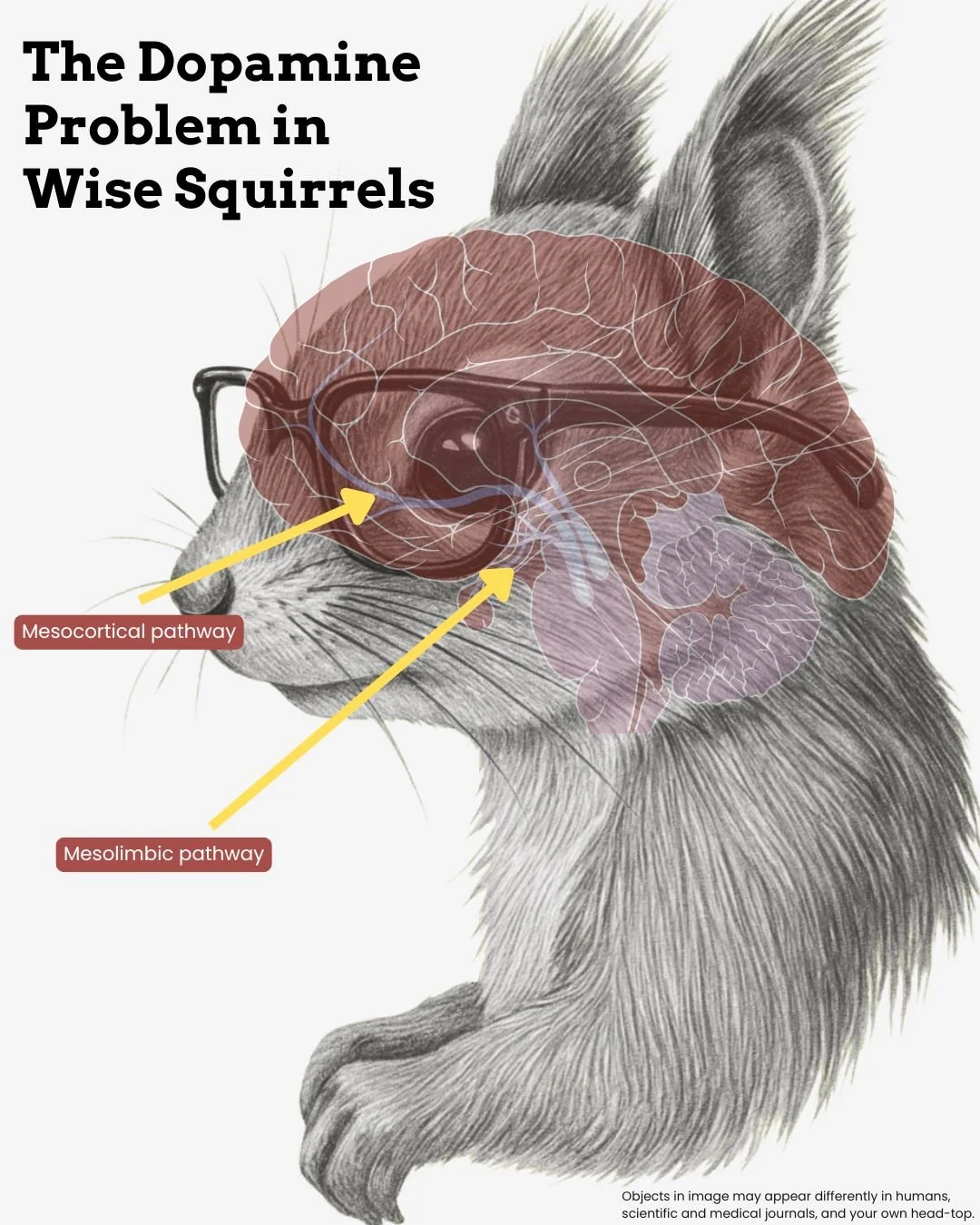
1. The Mesolimbic Pathway (the “Reward Circuit”)
This system connects your midbrain to your emotional memory centers. It lights up when something feels good — chocolate, praise, success, a win.
It teaches you:
Pleasure → repeat that behavior.
But with ADHD, this circuit doesn’t release or transport dopamine efficiently. That means you don’t get the internal “good job, do that again” reinforcement that keeps most people moving forward.
2. The Mesocortical Pathway (the “Executive Function Circuit”)
This pathway sends dopamine to the prefrontal cortex, the center for:
planning
decision-making
working memory
self-motivation
Stimulant medications like Adderall, Ritalin, and Vyvanse increase dopamine activity here, which is why they can help—but only while the medication is active. And even then, motivation challenges don’t always disappear, which is why working with a combination of a therapist and an ADHD-aware coach (shameless plug) can be your trifecta.
Dr. Marks compares ADHD’s dopamine system to a supply chain shortage. You have dopamine; you just don’t have enough transporters to move it where it needs to go.
So, Why Do Urgent, Interesting, or Novel Tasks Feel Easier?
Because ADHD motivation runs on four fuel sources:
1. Interest
If it’s fascinating or fun, ADHD brains can turbo-focus. That’s how I created Wise Squirrels!
2. Urgency
A looming deadline acts like a dopamine injection. This is why “I work best under pressure” is such a common ADHD refrain.
3. Challenge
Trying to beat a timer, solve a problem, or crack something difficult can wake the brain up.
4. Novelty
New environment, new tool, new method = new dopamine. Without at least one of these, a task feels impossible.
How to Make Hard Tasks Easier for the ADHD Brain
Here are the strategies Dr. Marks recommends in her video — all designed to increase dopamine or stimulate the reward pathways that ADHD brains struggle to activate.
1. Use Timers to Create Urgency
A deadline that’s three days away won’t activate motivation…but a 20-minute timer will.
Try:
“Beat the clock” sessions
One-hour focused sprints
Setting a micro-goal like “Finish this before the timer ends”
Timers shrink tasks down to something tangible and give you an immediate challenge to respond to.
2. Add a Reward Immediately After
ADHD brains learn best from fast, consistent reinforcement. Pair work with something enjoyable:
a show
a snack
scrolling TikTok
a walk
coffee outside
a podcast, here’s a good one!
If the reward happens after the work, the brain begins to associate effort with positive outcomes.
3. Use Body Doubling
Working near another person boosts accountability and reduces the emotional “friction” of starting.
Options:
a friend on Zoom
a coworking buddy
online body doubling sessions
YouTube “study with me” videos
The right partner (or video) creates gentle guidance without judgment.
4. Introduce Novelty
If a task feels stale, refresh the setup:
move to a coffee shop
change rooms
switch tools (voice notes instead of typing, for example)
use a different playlist
try working outdoors
A change in environment can kickstart dopamine just enough to make starting possible.
5. Try the Pomodoro Technique
This long-standing method keeps the brain engaged without pushing it into burnout. We made you a digital Pomodoro timer to try for yourself.
Standard pattern:
25 minutes work
5-minute break
Repeat 4 times
Then take a 30-minute break
The rhythm helps maintain focus by offering predictable relief.
The Big Takeaway
ADHD motivation challenges are not flaws. They are neurological.
The dopamine reward system isn’t delivering the internal “go” signal your brain needs — so you need external ways to create interest, urgency, novelty, or challenge.
If you want to get work done more consistently, don’t rely on willpower alone. Build structures that supply the dopamine your brain isn’t delivering automatically.
Timers. Novelty. Body doubling. Rewards. Short bursts. Expectations that match your wiring.
This is how ADHD brains get things done — not through force alone, but through fuel and community support, too. Join the Nest. See you inside.