PODCAST. ADHD Treatment, Therapy, and Stigmas with Dr. Gail Saltz, MD.
Episode Sponsored by Inflow. Try the free ADHD traits quiz and meet Quinn, your new AI ADHD companion. Get support when you’re stuck, overwhelmed, or just need to feel understood. Click here.
Wise Squirrels with Dr. Gail Saltz: ADHD, treatment, and the power of different wiring

On the ADHD Wise Squirrels podcast, I sat down with Dr. Gail Saltz, psychiatrist, psychoanalyst, and longtime public educator, to talk about what happens when ADHD is recognized later in life, what effective treatment actually looks like, and how the same “wiring” that can create real impairment can also correlate with meaningful strengths.
Who Dr. Saltz is, and why her lens matters
Dr. Saltz began by sharing her clinical background and the work she’s done for decades, translating mental health research for the public. That public-facing role is a big part of why this conversation felt grounded: she’s spent years bridging the gap between clinical nuance and what everyday people actually need to hear.
The “Wise Squirrels” reality: late diagnosis is common
We talked about a scenario I see constantly in this community: people don’t discover they have ADHD until adulthood, often when their child is diagnosed, and they suddenly recognize themselves in the criteria. Dr. Saltz pointed to stigma as the biggest historical driver, plus the way kids were mischaracterized as “lazy,” “bad,” or “not trying,” which can quietly damage self-esteem for decades. That’s a big part of why so many late-diagnosed adults arrive to ADHD support carrying grief, regret, and a lifelong narrative of “something’s wrong with me.”
Use code DECEMBER to SAVE 50% on your Nest Membership today before Jan 1, 2026.
Therapy styles: psychoanalytic, psychodynamic, CBT (and how to choose)
A helpful part of the conversation was Dr. Saltz explaining, in plain language, how different therapy approaches aim at different targets:
Psychoanalytic/psychodynamic work focuses on helping make unconscious patterns conscious, so they stop driving reactions, behaviors, and emotional states from the shadows.
CBT focuses more on conscious thoughts and distortions, and teaches ways to challenge and rewrite thinking patterns that fuel anxiety, shame, and stuckness.
Her key point: there’s no one “right” modality. The best approach depends on the person’s specific ADHD profile and what symptoms are creating the most impairment.
What “treatment” really means for adult ADHD
Dr. Saltz emphasized something I was glad she said clearly: we’re not treating a label, we’re treating the symptoms that disrupt your life. ADHD looks different in different adults, especially once anxiety, mood issues, and other “comorbidities” enter the picture. That’s why treatment needs to be tailored, not cookie-cutter.
We also explored the most common pillars of support:
Skills + behavioral workarounds (coaching-style tools) for executive function and organization
Talk therapy, especially when anxiety or shame is loud enough to interfere with learning skills
Medication, when it’s appropriate, with the honest reality that it can take trial and error to find the right fit and dose
One of Dr. Saltz’s strongest takeaways was that skills and workarounds are “lifelong tools,” while medication helps most while you’re actively taking it. In other words: meds can help, but a life is built on systems, skills, and support.
A bigger cultural issue: preventive mental health in the U.S.
We zoomed out to a topic that hits hard: in the U.S., healthcare is often reactive, not preventive, and that’s even more true for mental health. We talked about how many people don’t even have a regular doctor, how access and cost shape choices, and how medication can become the only “available” intervention when therapy and coaching are out of reach. The underlying theme was simple: we need a culture that treats brain health like we treat maintenance for everything else.
ADHD strengths: hyperfocus, creativity, innovation, and risk tolerance
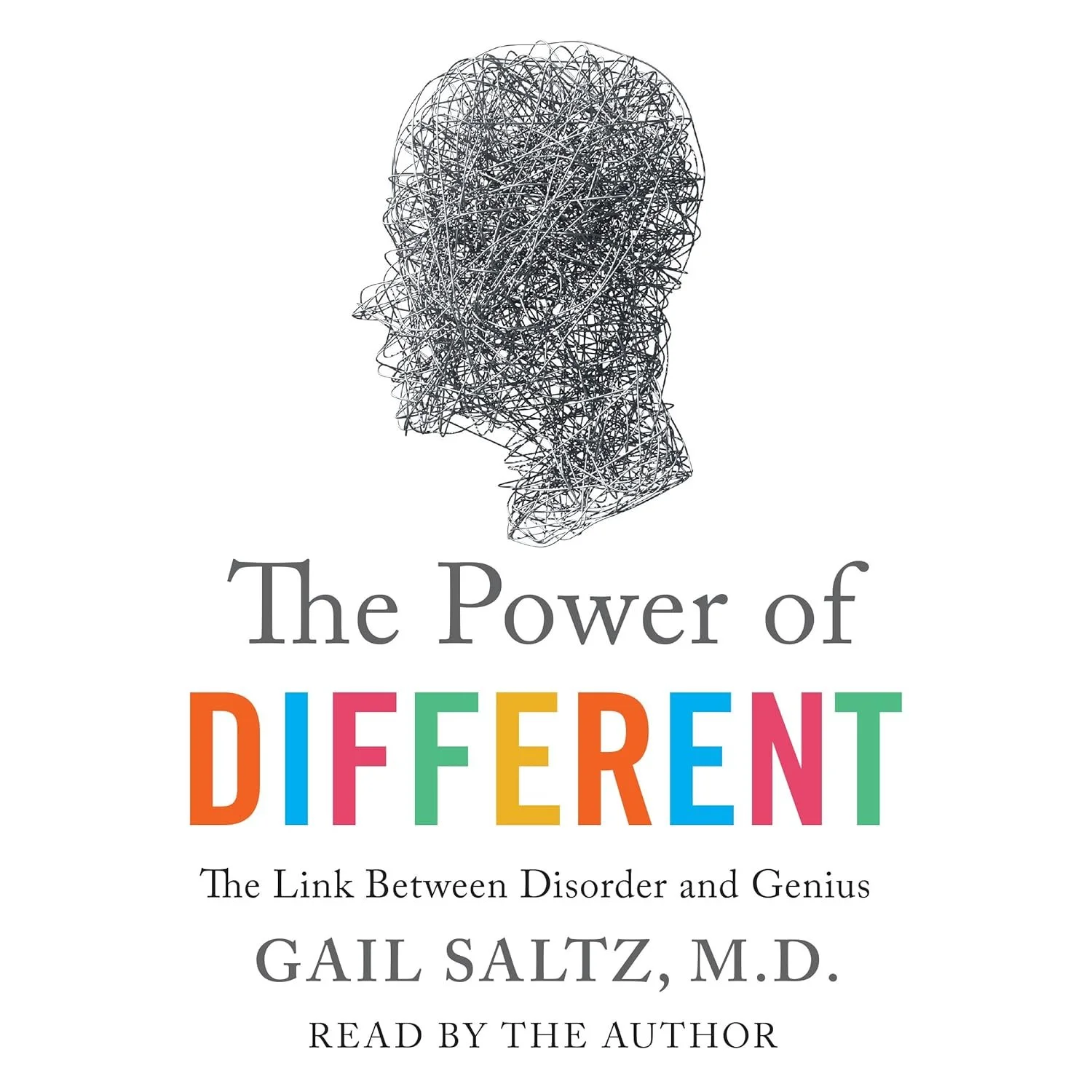
This is where Dr. Saltz’s book, The Power of Different: The Link Between Disorder and Genius, really came alive. She explained that the brain circuitry involved in ADHD can correlate with strengths, not because ADHD is “fun,” but because wiring differences can change multiple systems at once. We talked about:
Hyperfocus as the flip side of attention regulation, especially when something is genuinely interesting
Creativity and idea generation tied to a default mode network that spends more time in imagination and daydreaming
Risk tolerance and momentum, where impulsivity can show up as a willingness to run with an idea rather than endlessly hesitate
The practical takeaway wasn’t “ADHD is a superpower.” It was: if you know what reliably lights up your interest and reward system, you can design work and environments that help you aim your strengths instead of fighting your wiring all day.
Career fit, partnerships, and “sandwiching” interests
At one point, I asked the question a lot of entrepreneurial ADHDers wrestle with: how do you combine your interests into a sustainable career or business, especially when the “business” parts can feel painful? Dr. Saltz’s answer came back to self-awareness (what truly energizes you), aptitude (what you’re actually good at), and then a crucial strategy: pairing.
If you’re the creative front-person, visionary, storyteller, or big-idea generator, it can be transformative to intentionally partner with someone who loves systems, finances, details, and operations, not because you’re “broken,” but because complementary wiring makes teams stronger.
Integrity, media, and a moment of levity
We also touched on Dr. Saltz’s decision, earlier in her career, to protect her clinical integrity rather than chase a flashy media opportunity, and why that matters in a world where controversy can be profitable. And yes, we made room for one of the most human moments of the conversation: Dr. Saltz’s story about winning a blueberry pie eating contest in college. The joy of that moment felt like a reminder that serious topics don’t require seriousness 100 percent of the time.
The urgent message for late-diagnosed adults: get help, and don’t wait
If there was one throughline Dr. Saltz returned to, it was urgency paired with compassion: forgive the time you didn’t know, but seek treatment as soon as you can. She explained the idea of lifelong brain plasticity. Even later in life, learning new skills, practicing new patterns, and receiving effective treatment can strengthen the neural pathways you want and weaken the ones you no longer want running your life.
Parenting, stigma, screens, and the next generation
We ended on the future: I shared my opinion that if more parents understand ADHD earlier and treat it earlier, we can reduce suffering and prevent a lot of intergenerational harm that comes from years of misunderstanding, shame, and untreated symptoms. Dr. Saltz also raised concerns about the impact of screens and social media on kids’ brains, and why delaying and minimizing exposure matters. The hopeful note was this: as stigma drops, the path to support can get shorter, and fewer kids will spend years believing they’re “lazy” or “bad” when they’re actually struggling with treatable symptoms.
If you’re a late-diagnosed adult, a fellow Wise Squirrel, and any of this hit home, the big message from this episode is clear: you’re not alone, you’re not broken, and the sooner you get the right support, the more of your life you get back.
WINNERS WILL BE RANDOMLY SELECTED IN ONE WEEK. GOOD LUCK!
-
[00:00.000 --> 00:08.560] I am Dr. Gail Salz, and I am a psychiatrist and a psychoanalyst, and I'm a psychiatrist at the
[00:08.560 --> 00:14.160] Wild Cornel Medical College, and the psychoanalysts with the New York Psychoanelic Institute,
[00:14.160 --> 00:24.240] and I do a lot of what I'll call public education. So that, and I have for decades now, whether that is
[00:25.120 --> 00:34.720] news, shows, on all manner of mental health issues, to radio programs, to podcasts, I have some,
[00:36.560 --> 00:44.640] and I'm involved with political, not political, I guess I'll say medical organizations, I'm the head
[00:44.640 --> 00:52.080] of communications for the American Psychoanelic Association, and I think relevant to today, my latest
[00:53.040 --> 00:58.640] is the power of different, the link between disorder and genius, where I do talk about
[00:59.360 --> 01:06.000] the important understanding of the hard wiring behind symptoms that cause us to suffer from
[01:06.000 --> 01:11.680] mental health issues, being part and parcel of the same wiring that causes people to have
[01:12.240 --> 01:18.560] potential great strengths, and ADHD is certainly one of those issues.
[01:19.360 --> 01:24.800] Yeah, yeah, it absolutely is. Well, I know with psychoanalysis, and sometimes I don't know
[01:24.800 --> 01:31.120] everybody, if everybody knows the differences in treatments and styles, and by the way,
[01:31.120 --> 01:35.840] I'm not a doctor, and I never pretend I'm one on the internet, or anywhere else for that matter.
[01:35.840 --> 01:42.720] So yeah, I wanted to let you know about that too, but I know with you, it was after your residency
[01:42.720 --> 01:49.520] of psychiatry that you went into psychoanalysis. Tell me a little bit about psychoanalysis, I know
[01:50.240 --> 01:55.200] I think like CBT probably rolls into that too, but I won't put words in your mouth.
[01:55.920 --> 02:01.680] No worries, so I currently, you know, I'm still a psychiatrist, which basically means,
[02:01.680 --> 02:06.480] right, unlike a psychologist, I went to medical school, I can prescribe medications,
[02:07.280 --> 02:15.120] and psychoanalytic training allowed me to further develop my therapeutic skills
[02:16.080 --> 02:24.080] in the area that has to do with therapies that help make what's unconscious in your mind,
[02:24.080 --> 02:32.400] conscious, so that the insight and making it conscious prevents those unconscious
[02:32.400 --> 02:38.960] conflicts and thoughts and wishes from driving behavior and feeling states that may be causing
[02:38.960 --> 02:46.400] you problems in your life. So in a nutshell, psychoanalytic treatment, it can be a very intensive
[02:46.400 --> 02:53.200] treatment multiple times a week looking at these conflicts, but it also can be what is called a
[02:53.200 --> 03:01.440] psychodynamic treatment, which is sort of the same principles, but light in that, you know, it could
[03:01.440 --> 03:09.840] be once a week, twice a week, and it is different from cognitive behavioral therapies, which I
[03:09.840 --> 03:17.040] also learned in my residency training and talk about and work with, which has more to do with looking
[03:17.040 --> 03:26.560] at conscious thoughts that are in conflict or maybe cognitively not consistent with reality
[03:26.640 --> 03:33.760] in some way that is driving bad feeling states and behaviors and purposely changing that thought
[03:34.720 --> 03:42.880] and therefore the behaviors. It's different in that, you know, it doesn't look back at your past
[03:42.880 --> 03:48.960] history, things from your childhood that may be shaping your current life in terms of cognitive
[03:48.960 --> 03:55.200] behavioral therapy. So there are different modalities of therapy that are depending on the person
[03:55.200 --> 04:01.760] and their psychological issues, right, can be better. And so I'm invested in understanding
[04:01.760 --> 04:09.440] what a particular patient might need and using the modality that would be most helpful.
[04:10.000 --> 04:17.360] Yeah, and I know, you know, getting the support for why squirrels, as I like to call them,
[04:17.360 --> 04:23.280] myself included, people that are late diagnosed adults, right? And by the way, I say that because
[04:23.280 --> 04:27.680] why is comes from the wisdom we've accrued through our lives through coping mechanisms and masking
[04:27.680 --> 04:34.720] and things unknowingly with ADHD and not knowing it, but still surviving and reaching successes,
[04:34.720 --> 04:39.520] whatever those may be, but the fact that I'm sitting here talking to you is a great success, right?
[04:40.640 --> 04:46.160] You know, and I can go out later and go take my cute little dog out for a walk and kiss my wife
[04:46.160 --> 04:52.640] when she gets home and rumble feet like I have a great life. And but, you know, for 50 of those
[04:52.640 --> 04:59.440] years, I didn't know I had ADHD. And so I actually just did a talk at the 96th Streetwide,
[04:59.440 --> 05:06.560] I don't know if you're familiar with it in New York City, where I did a basically a talk about
[05:06.560 --> 05:15.200] how many people are not diagnosed until adulthood. And in fact, often, and I see this all the time,
[05:15.680 --> 05:19.840] they come in because their child just got a diagnosis, right? Yeah, and it's usually one of them.
[05:20.640 --> 05:28.880] Exactly. And they go, oh, wait, oh, meant to. Their child got a diagnosis. And they go, oh, but
[05:28.880 --> 05:36.640] this was me. This was me completely. I am the same as my child. And I never got this diagnosis,
[05:36.640 --> 05:44.640] wait, wait, and then they come in. And so that is a very common scenario. And, you know,
[05:44.640 --> 05:50.880] the reasons for that are many, right? There are, there's everything from, as you started this show
[05:50.880 --> 06:00.960] at today, stigma was so very prevalent that the last thing anybody wanted to do was make a diagnosis
[06:00.960 --> 06:06.720] about anything to be honest with you, right? And so we really suppressed, I think, the knowledge
[06:06.720 --> 06:13.200] base about these things and the willingness to look at a kid who was struggling or a young adult
[06:13.200 --> 06:19.680] who's struggling and investigate why they might be struggling and give it a name, you know,
[06:20.720 --> 06:26.080] and seek treatment because of stigma. I would say that is the number one reason. We knew less.
[06:26.240 --> 06:35.920] And we, unfortunately, just called a lot of kids, you know, lazy or bad student or stupid.
[06:37.680 --> 06:43.840] And, you know, damaged their self-esteem and lost them to a system that was probably,
[06:43.840 --> 06:51.600] you know, would have benefited them dramatically. And so, you know, by the time you've lived
[06:51.680 --> 06:58.000] through all that as a young person, you certainly are not thinking about maybe I've got some very
[06:58.000 --> 07:02.080] specific kind of problem that could be getting treatment. You're not thinking that, you're thinking
[07:02.080 --> 07:12.160] you're lazy and dumb and, you know, not a good student. So we didn't diagnose much in a couple
[07:12.160 --> 07:18.480] of decades ago, right? But a lot of kids weren't diagnosed a couple of decades ago. So they didn't
[07:18.560 --> 07:23.600] grow up knowing that this was something, right? They didn't. And then we, and there was also sort
[07:23.600 --> 07:29.200] of a mythology, well, like whatever that is, it's just rambunctiousness and adolescence and all
[07:29.200 --> 07:37.120] these things. And then you grow out of it, which, you know, most people with ADHD, some symptoms
[07:37.120 --> 07:43.200] may change, but they don't really grow out. Right. Yeah. Well, I think it was Tommy Tuberville.
[07:43.200 --> 07:47.600] I know it was Tommy Tuberville, who's like, I forget it. I think he's a senator or something.
[07:47.600 --> 07:51.520] But he, like, I have a quote that I've used in some of the training and things that I've done
[07:52.320 --> 07:59.120] that he, he basically was questioning RFK Junior and saying, you know, back in my day, we, we
[07:59.120 --> 08:05.280] would just kick, you know, beat, basically beat the kids. Beat the, this, you know, distraction out
[08:05.280 --> 08:11.360] of the kids. And like, like talking about corporal punishment, it's like Jesus, man, like you're,
[08:12.160 --> 08:18.800] you were part of the problem in such a major way because there's a high performance of men
[08:18.800 --> 08:24.320] in the, in the prison system. Yeah. Who have ADHD. I mean, that's really, you know, right? So what
[08:24.320 --> 08:29.760] did you, what did you teach them? You taught them they couldn't survive in school. They were lost
[08:29.760 --> 08:37.280] the educational system. And they did, they did start getting into trouble. And you, you hit them
[08:37.920 --> 08:43.040] that you, you taught them like, this is the way to go, you know, it's, yeah, not good.
[08:43.040 --> 08:47.680] Well, I mean, we, we are, you know, and you can always correct me where I'm wrong, of course.
[08:47.680 --> 08:52.560] But like my understanding, you know, as far as like our craving for dopamine and our,
[08:54.080 --> 08:59.040] like the likeness of addiction, different addictions taking place, you know, there's,
[08:59.040 --> 09:04.560] there's that aspect to it where, you know, and just like the impulsivity of like shoplifting
[09:05.040 --> 09:10.560] or, or just in a moment, right? Which can obviously end you up if you're untreated and you have no
[09:10.560 --> 09:16.960] idea, you have ADHD or, or how I always call it my operating system, right? Of, of how your operating
[09:16.960 --> 09:22.960] system works, then yeah, exactly to your point, like you just think you're a loser and that,
[09:22.960 --> 09:31.360] and that's what you've been told all your life. So, so on a happier note, I do, I did want to ask you
[09:31.840 --> 09:35.920] when we were talking, when I was talking about those different kind of forms of psychiatry and,
[09:37.520 --> 09:42.000] if, and I know it's different for different people, but there's certainly some, some boxes to be
[09:42.000 --> 09:49.840] ticked for adults who have just been diagnosed, as far as what the treatments should be, at least
[09:49.840 --> 09:55.760] should be considered. And again, without putting words in your mouth, but you know, my,
[09:55.760 --> 10:00.480] my understanding is the need, the importance of, of medication, certainly, you know,
[10:00.480 --> 10:07.120] stimulants and things. And, and therapy, I think, like, and, and maybe an ADHD coach or someone.
[10:07.120 --> 10:14.400] But I wish, from my own experiences, you know, I've kind of gone from my GP to a psychiatrist
[10:14.400 --> 10:19.200] who prescribed me different meds until, and, and I wish I could have just, you know, snapped my
[10:19.200 --> 10:25.440] fingers and found like the right meds in the right way. And it took some trial and error, not in a
[10:25.440 --> 10:30.400] bad way, but, you know, just trying to find the right medication, but also the right dose.
[10:31.360 --> 10:37.120] And, and, and making sure it plays well with my anti-anxiety medication, which I am also now on,
[10:37.120 --> 10:45.600] as a, as a one of the, the popular bedfellows of ADHD. My psychiatrist isn't into talking much.
[10:45.600 --> 10:50.320] She's like, she's in, she's not pushing drugs, because I'm very careful about that being a
[10:50.400 --> 10:56.960] Canadian, Canadian now, I guess. She kind of manages the medication. And now I have a new psychiatrist
[10:56.960 --> 11:01.840] who's, I had a therapist and I've switched to a new psychiatrist who, who does a lot of talk therapy
[11:01.840 --> 11:08.080] and doesn't want to deal with medication. And I wish it was all under one hood so that it all
[11:08.080 --> 11:12.640] communicated well together. But yeah, so getting to that question again, which is like, if somebody
[11:12.640 --> 11:17.200] was just diagnosed, what are, what are maybe three things they should be doing?
[11:17.200 --> 11:22.880] Well, wow. So you just, like, there, there's a lot there that you, you explain and, and I
[11:22.880 --> 11:28.240] made an HD. Well, two others can. Now that, like, like, the, you know, you're just sort of a classic
[11:28.240 --> 11:36.080] story in many different ways, right? Of, of, of, yes, a lot of people with ADHD have what are
[11:36.080 --> 11:42.560] called in psychiatry, comorbidities, you know, other diagnoses that come on. Sometimes because,
[11:42.560 --> 11:47.520] really, because of the symptoms of the ADHD, right? Like, it's very anxiety-provoking to be in a
[11:47.520 --> 11:55.200] world where, you know, you are constantly measuring yourself against others and finding, I can't stay
[11:55.200 --> 12:01.840] as organized or I've screwing up things or another mistake is around the corner or I'm going to do
[12:01.840 --> 12:06.960] something impulsive and it'll be bad or dangerous or, you know, all of that, right? So it is anxiety-producing,
[12:06.960 --> 12:13.760] but also, you're wiring is such that you have a higher likelihood of struggling with an anxiety
[12:13.760 --> 12:24.720] disorder. Same reason, a substance abuse disorder, right? A mood disorder. And so, really, the deal with
[12:24.720 --> 12:31.680] ADHD is because it doesn't look the same in everyone. Everything, for reasons that have everything to
[12:31.680 --> 12:39.440] do with, like, comorbidities, but also just everybody's ADHD doesn't look the same, especially as an
[12:39.440 --> 12:47.600] adult, right? Some people have more problems with impulsivity as it plays out in their social world,
[12:47.600 --> 12:53.520] you know, I'm relating to others and some people have more difficulty with executive function
[12:53.520 --> 13:00.800] issues as it relates to organization and their workplace. Like, it, it really varies. So people
[13:00.800 --> 13:10.240] need a very individual and tailored treatment and as you're bringing up, right? Somebody who really
[13:10.240 --> 13:17.040] knows what they're doing and will ask a really appropriate and nuanced history to be able to
[13:17.040 --> 13:22.800] elucidate the symptoms that really are causing you the most problems because essentially, right,
[13:22.880 --> 13:31.600] we're not treating ADHD. We can't change the wiring of that what I sort of refer to as kind of that
[13:31.600 --> 13:38.800] faulty switch in your default network that, you know, you can't as easily decide when to turn it
[13:38.800 --> 13:44.880] on and when to turn it off. But it does turn on and off and as you're pointing out responsive to
[13:44.880 --> 13:53.600] the dopamine reward system. But what are the symptoms that this is causing? And that's what we're
[13:53.600 --> 13:59.680] going to treat. You were your particular symptom formation. And then as you're saying, there are two
[14:01.280 --> 14:08.640] different modalities of sort of getting at that. I, as someone who uses, who can prescribe
[14:08.640 --> 14:14.560] medication, but also can do therapies, I'm always a big proponent of starting with therapies
[14:14.560 --> 14:23.360] first. Just sort of see how far you'll get unless someone really is pretty far out on the symptom
[14:23.360 --> 14:28.720] of some particular sort. So much so, for example, if it's anxiety that it prevents
[14:29.360 --> 14:36.960] voilearning of the therapy skills because you're so anxious that your frontal lobe is essentially
[14:37.520 --> 14:43.360] offline, consumed with anxiety, then you can't learn therapy. And this is true of other issues,
[14:43.360 --> 14:52.320] not just ADHD. Then we do want to add medication right away. So it's looking at that. There are, as
[14:52.320 --> 14:59.600] you again, elucid, you know, pointed to, there are medications that are better for some people
[14:59.600 --> 15:04.800] than others that unfortunately it is a lot. It is some trial and error. You know, does this medication
[15:05.760 --> 15:13.040] work for you? Does it, how many side effects does it cause? How tolerable are those side effects?
[15:14.000 --> 15:20.720] Can we do anything with dosage and time of day such that it mitigates those side effects? And so
[15:21.840 --> 15:28.160] you kind of might have, you know, you start with a typical and then, you know, you might have to
[15:28.160 --> 15:34.240] make a change. So that, that is true. But I don't always, wouldn't always start with that depending
[15:34.240 --> 15:41.040] on, as I said, the symptoms and how severe they are. I might start with, you kind of refer to
[15:41.040 --> 15:48.720] it as coaching, which is basically teaching what I've called workarounds for the very specific
[15:48.720 --> 15:56.320] things that are causing problems. If for example, you know, it's executive function organizational
[15:56.320 --> 16:02.960] things, then, you know, there are very specific techniques to address, you know, your, you know,
[16:03.760 --> 16:11.840] you're reading a document, the document has directions. It has, you know, have you got,
[16:13.200 --> 16:19.760] or the answer is probably, you don't have the innate executive function tool that maybe somebody
[16:19.760 --> 16:27.040] with ADHD does not have, does have. You need to be taught, okay, every time I see something that
[16:27.040 --> 16:33.360] is, oh, a direction, as I hit it, I'm underlying that. I'm circling this. I'm, I'm, I'm filing,
[16:33.360 --> 16:39.920] I'm creating file system in my home so that I don't keep losing acts that very specific sort of
[16:40.800 --> 16:49.520] extraneous hard drive for you to utilize that can make a real difference and does make a real
[16:49.520 --> 16:54.720] difference. That can be done in social interactions, or that could be done in work interactions,
[16:54.880 --> 17:02.960] depends on where the issues lie. And I really would always recommend that because unlike medication,
[17:02.960 --> 17:08.480] which is sort of a band-aid and only works while you're on the medication, these things are like
[17:08.480 --> 17:16.240] lifelong tools, right, that will serve you. Yeah. And then psychotherapies, if the issue,
[17:16.240 --> 17:24.400] for example, is a lot of anxiety, then yes, a cognitive behavioral therapy, and we're not talking
[17:24.400 --> 17:31.440] about forever, you know, maybe, and sessions, you know, to identify the, the cognitions, the thoughts
[17:31.440 --> 17:40.720] that are anxious thoughts, examine them, essentially, if you will rewrite them, and, and note it,
[17:40.720 --> 17:49.440] note the impact on behaviors can be super helpful to people who have anxiety period, and, you know,
[17:49.440 --> 17:56.800] but certainly with ADHD. So there's a role for these things, for people who have, you know,
[17:57.440 --> 18:04.880] a lot of symptoms, a combination, is best. But today in our country, unfortunately, many people
[18:04.880 --> 18:12.000] just, you know, only have, feel they have access to, or time for, or money for, they're GP giving
[18:12.000 --> 18:18.240] them a med, and then, you know, that, that has a limited value. And there's also sort of this,
[18:18.480 --> 18:23.280] I mentioned earlier, I'm from Canada, so, but I've been in the States in Nashville here for 18
[18:23.280 --> 18:31.840] years. So long enough to know that as a culture, Americans, not picking on anyone specifically,
[18:31.840 --> 18:36.960] but as a culture, and not really to Americans fault necessarily. I mean, you can't advertise all
[18:36.960 --> 18:41.520] these drugs in other countries. It's only here that you put on Netflix, and suddenly you're
[18:42.000 --> 18:46.960] narrated by ads about every bloody pill in the, in the world, and ask your doctor about X,
[18:46.960 --> 18:52.480] and ask your doctor about Y. And it's like, how about trust your doctor to know about X and Y,
[18:52.480 --> 18:57.120] and to, to recommend something to you. And so, yeah, don't give me a start on that, because
[18:59.200 --> 19:02.640] yeah, but I've been thinking about that a lot, actually, because I was listening to a podcast
[19:02.640 --> 19:08.560] recently about, one thing that I did in 2020, when the world was imploding, and, you know,
[19:08.560 --> 19:14.000] I had my own stresses, tornado, destroyed my kids' school, and then we were blown out of our
[19:14.000 --> 19:19.120] house for three months after a storm, and in addition to all the other, of course, you know, things
[19:19.120 --> 19:24.960] that were affecting everybody in 2020, that was before I knew I had ADHD, and I made a lot of changes
[19:24.960 --> 19:30.240] to improve myself for personal reasons, and, you know, including quitting drinking, that's five
[19:30.240 --> 19:35.520] years sober, start mindfulness and meditation, and do, like, take that seriously for a change.
[19:35.520 --> 19:40.960] I've interviewed Joseph Goldstein here on the podcast, who, like, it's just incredible, and I
[19:40.960 --> 19:46.560] highly recommend everybody listen, and Diana Winston as well. And to some of the stuff you mentioned too,
[19:46.560 --> 19:53.440] as far as, like, cognitive, cognitive behavioral therapy, I had Russ Ramsey on, and he's great about
[19:53.440 --> 20:01.360] CBT, especially for ADHDers, and Lydia Zylaska also on talking about ADHD and mindfulness and meditation,
[20:01.440 --> 20:09.120] because, and I recently interviewed Ellen Langer about mindfulness, who, and she's not really into
[20:09.120 --> 20:14.880] the whole meditation thing, she's more into just being mindful in the moment, but I think you
[20:14.880 --> 20:19.120] were touching on that, like, about, I forget the word you said, but you were, I think you were
[20:19.120 --> 20:25.840] getting at, like, reframing, right, like thoughts, these negative thoughts, and maybe helping to rewrite
[20:25.920 --> 20:31.280] our stories, and, but I was also thinking about the podcast I was listening to recently.
[20:31.280 --> 20:37.680] It was Dan Harris' podcast, 10% happier, and he was talking with a, a Buddhist psychiatrist,
[20:37.680 --> 20:42.480] or psychologist, I can't remember, on a recent episode, and they were talking about happiness,
[20:43.200 --> 20:48.240] and from an outsider's perspective, you know, being Canadian and living in the States,
[20:48.480 --> 20:56.000] I'm sympathetic to Americans, you know, when you look at these lists of the world's happiest
[20:56.000 --> 21:02.000] countries, America is never on there, or if it is, it's near the bottom, or quite low, and you're
[21:02.000 --> 21:07.440] like, how the hell is that possible? We have an abundance of everything, I mean, I can walk outside,
[21:07.440 --> 21:12.960] and, you know, I'm not in, like, the outskirts of Kiev, or, or, or, or anywhere else for that matter,
[21:13.120 --> 21:19.280] like, we're not in a war, like, most Americans don't know what war even is to experience it, I mean,
[21:20.000 --> 21:25.200] and so we have so much privilege in this country, but I feel like the system,
[21:26.640 --> 21:31.360] and especially in this day and age, we don't have to go there, but I feel like the system
[21:32.160 --> 21:40.000] is built to keep us anxious, whether it's the media, whether it's social media algorithms, whether it's
[21:40.000 --> 21:48.000] it's, it's, it's, and it's also this lack of access to healthcare, like any other country,
[21:48.000 --> 21:53.520] when I moved to the States, I was speaking to a neighbor who's my best friend here, and I said,
[21:53.520 --> 21:57.360] who's your GP? And he's like, what? And I'm like, your GP, he's like, what's that? And I'm like,
[21:57.360 --> 22:01.440] your general practitioner, who's your family, who's your doctor? And he's like, like, our pediatrician,
[22:01.440 --> 22:06.080] you mean for the kids? And I'm like, no, dude, you, who is your doctor? Because I need a doctor.
[22:06.080 --> 22:10.160] And he's like, oh, I don't have a doctor. And I'm like, I'm like, but don't you go for
[22:10.160 --> 22:14.880] annuals to get, you know, checkups and things? And he's like, no, I only go if I'm like sick.
[22:15.520 --> 22:20.000] And that's such like the American way. And I'm like, dude, you take your car to get two nuts,
[22:20.000 --> 22:25.360] and oil changes, right? Like, you don't just take it in when it's not running. And I feel like
[22:25.360 --> 22:33.680] you don't have a great, um, a great psyche here for preventive healthcare, right? And, um,
[22:33.680 --> 22:40.160] and but moreover, uh, we have no psyche here for preventive mental health care,
[22:40.800 --> 22:49.200] which I try to talk about. But, you know, it's, it's um, you really, it's, it's a concept that's
[22:49.200 --> 22:55.120] very foreign to people, the idea that you would take care of your brain, your mind,
[22:56.240 --> 23:02.240] in a way to try to prevent the kinds of issues that can present later.
[23:02.480 --> 23:07.040] It's frustrating to me because I, and I said, uh, as I said, I don't fall to Americans because
[23:07.040 --> 23:13.760] we live in a massive media echo chamber. And, and many Americans have never left the country.
[23:13.760 --> 23:20.320] Or I've met Americans who haven't left Tennessee. Um, and so if you don't leave the country,
[23:20.320 --> 23:25.440] they're, I love seeing a, seeing a gusty. And I think wrote this line. I love about the world
[23:25.440 --> 23:30.000] being a block. And for those who haven't traveled, they've only lifted one page, you know, because
[23:30.000 --> 23:36.320] it takes travel, like I met my wife in Ireland of all places. And she was from Tennessee.
[23:36.320 --> 23:40.560] But, and we lived abroad in different countries over the years and things. And, and when you live
[23:40.560 --> 23:45.520] and travel, you get to see how other people are. And you, if you go to Scandinavia, you're like,
[23:45.520 --> 23:52.240] oh, that's why they don't need the, the fanciest new TV or new car. They're happy with what they have.
[23:52.240 --> 23:56.320] But they also don't have to worry about health care because it's free and they can go when they
[23:56.320 --> 24:01.440] need it. And the government wants preventative health care because they don't want to pay tons of
[24:01.440 --> 24:07.760] money on keeping everybody alive. And it's just like, uh, let's talk about a more important topic.
[24:07.760 --> 24:12.800] I want to hear about the time that you won the blueberry pie eating contest at your college.
[24:15.520 --> 24:22.080] Wow, you, you don't deep in figuring out who I was. And then who doesn't love blueberry pie for
[24:22.160 --> 24:29.760] I am not going to ask that on a podcast. Okay. Um, yeah. Actually, it's very funny. I just was back
[24:29.760 --> 24:37.440] last week doing a public lecture at Lehigh University, um, to undergrads and grad students and
[24:37.440 --> 24:42.800] professors about this content that we're talking about today are basically, you know,
[24:43.680 --> 24:51.680] neurodiversity and the hard wiring of particular strengths. And so, uh, I was reminded of my
[24:52.240 --> 25:00.400] of my college days, which did include this zany competition of a blueberry pie eating hot. You
[25:00.400 --> 25:06.400] couldn't have, you couldn't have gotten me to do a hot dog eating contest. No way. But you said
[25:06.400 --> 25:12.480] blueberry pie. Okay, then, you know, I like you. Yeah, man. I would say that right now. Exactly.
[25:12.480 --> 25:19.680] Exactly. So I was like, yeah, I think I just, I went to heaven and, uh, I'm a competitive gal.
[25:19.680 --> 25:26.160] And, uh, so I won the rest of history. No, I love that. And if that's your most embarrassing,
[25:26.160 --> 25:30.800] like story from college, I think you're okay. I think I'm okay. I feel so balanced.
[25:30.800 --> 25:36.400] My most in the public one. Yeah. Yeah. Yeah. I feel so valid for my kids who are both at college
[25:36.400 --> 25:40.000] now. And I'm like, just don't put it on the internet. Don't put it on the internet. Yeah.
[25:40.000 --> 25:46.560] Won't take any digital photos. Um, but, um, and one of the things I like about you too is the fact
[25:46.560 --> 25:51.920] that like way back when when you appeared on Oprah, uh, or I think a couple or a few times,
[25:51.920 --> 25:56.320] you turned down your own TV show to protect your own clinical integrity. And I always,
[25:56.960 --> 26:03.200] I think that's a pretty cool move. Um, because there's a lot of quacks these days who are sharing
[26:03.200 --> 26:09.760] all sorts of misinformation or disinformation even just to sell a product or, you know, and it's,
[26:09.760 --> 26:14.720] it's a shame because, and I think that's, that's often the business. I mentioned like I've been
[26:14.720 --> 26:19.920] podcasting for 20 years. That is sort of the business model of podcasting now is, you know,
[26:19.920 --> 26:25.600] many of the podcasters I enjoyed suddenly real, they would start platforming people, bad people
[26:25.600 --> 26:31.680] with that ideas to, and, and those would spread to millions of listeners. And suddenly they got
[26:31.680 --> 26:37.520] more clicks, more lessons because of that controversy. And so then they continue platforming people.
[26:37.520 --> 26:44.160] And, and that's the business model. They get more money. That is the industry. It's been that way
[26:44.240 --> 26:49.360] for a long time. And I think, you know, when I when I first started doing TV things, you know,
[26:49.360 --> 26:55.680] no one was talking about mental health. So it was, it was a sort of novel in, you know, in and of
[26:55.680 --> 27:04.480] itself, right? And, um, and, and that was good. But really over time, you know, I guess I'll say
[27:04.480 --> 27:09.360] people come, become desensitized to the novel and they want more than what's like else they want.
[27:10.160 --> 27:16.960] And, um, yeah, there were some, I mean, crazy, it's kind of came to me. I wanted to do some show on
[27:16.960 --> 27:25.440] like fears and phobias and I, we should drive down. I should be part of the like a caravan and we
[27:25.440 --> 27:33.360] would drive down Route 66 and like, dangle people over a cliff to explore their fear of all,
[27:33.360 --> 27:39.280] what, you know, I was like, you know, no. Yeah. Yeah. Yeah. Yeah. Yeah.
[27:39.280 --> 27:45.440] Well, thank you. It's like fear factor and putting people in like a crate of spiders and,
[27:45.440 --> 27:51.120] and I'm like, you know, that's not, you know, I guess you could technically call that flooding,
[27:51.120 --> 27:56.320] which, you know, has been explored as a treat, but that's, that's a terrible thing to do to people.
[27:56.960 --> 28:05.680] I'm a healer. I cannot do that. And, uh, and of course, yeah. So anyway, as you will,
[28:05.680 --> 28:12.480] as I'm sure everybody will notice on talk shows or shows at any sort, they, they more than push the
[28:12.480 --> 28:21.040] window and, um, you know, it becomes like I really, at heart, I'm a position, you know, and, uh, yeah.
[28:21.600 --> 28:26.560] Yeah. And you've taken a note and, and hopefully you stick to that because that's what, yeah.
[28:26.560 --> 28:31.440] So you talk about like, not just like being like having a disorder, but rather a different,
[28:31.440 --> 28:37.920] sort of brain, a brain difference as, as you say, let's talk and obviously with a focus on ADHD,
[28:37.920 --> 28:42.160] because, you know, that's, that's primarily my focus of this podcast. Of course, there's other
[28:42.160 --> 28:47.200] things that come along with that. But, um, and we can talk about this too with your new book. And
[28:48.080 --> 28:53.680] obviously we need to understand our strengths. And I think a lot of times it's funny, like every
[28:53.680 --> 28:59.280] productivity expert I know, and I know a bunch of them who are authors and things, every productivity
[28:59.280 --> 29:04.480] expert I know, knowing what I know about ADHD now, I'm like, oh, geez, like all of these people have
[29:04.480 --> 29:11.040] ADHD for sure, whether they're diagnosed or not. I'm like, my little ADHD detector. Um, and it's
[29:11.040 --> 29:15.680] interesting because I find so many, even like Einstein and other famous people who are not no longer
[29:15.680 --> 29:21.760] with us and who are never really diagnosed Steve Jobs and others certainly seem like they
[29:21.760 --> 29:28.640] probably were candidates for ADHD. And I think a lot of the times, ADHDers, especially when you're
[29:28.640 --> 29:32.720] undiagnosed, you, you are going out of your way. This is what I've done a lot of my career. My book
[29:32.720 --> 29:38.640] and things is solving problems that I'm experiencing, assuming everybody else has those problems. And
[29:38.640 --> 29:43.680] everybody else does have the problems. There's only so many problems in the world, right? So we may have
[29:43.760 --> 29:49.840] problems with just arriving places on time and productivity or cleaning our homes. And yes,
[29:49.840 --> 29:56.080] you can have those problems, you know, and be neurotypical. But I think that it's the ADHDers who
[29:56.080 --> 30:00.800] tend to maybe solve these problems some of now. I don't know. Tell me a little bit about
[30:00.800 --> 30:06.960] the book and your thoughts on tapping into these strengths while also not, you know, diminishing
[30:06.960 --> 30:13.120] the importance of reading ourselves. Well, to your point, right? All mental health diagnoses
[30:13.120 --> 30:22.560] are, as you just alluded to, things that everybody experiences. But to some degree that it compromises
[30:22.560 --> 30:26.960] your functioning in some arena or maybe many areas, right? Everything, everything.
[30:28.800 --> 30:33.200] And so there isn't such a sharp line as people would like to believe they would like to say,
[30:33.200 --> 30:38.480] oh, that's mental illness. And I'm over here in the non-mental illness camp.
[30:39.600 --> 30:46.000] And at some point or another close to half of all Americans will struggle with some mental health
[30:46.000 --> 30:55.360] issue. And to some degree, that's because we have over a hundred billion neurons and a hundred
[30:55.360 --> 31:00.720] trillion synapses in the brain. And if you look at data from the Human Connect Home project
[31:01.520 --> 31:09.760] done many years ago, they looked at, you know, 1200 normal brains, you would find that there is
[31:09.760 --> 31:15.280] variation, right? There's so much wiring, right? There's variation person to person. There's
[31:15.280 --> 31:22.400] some variations. So when you've got close to half of people struggling with something symptom
[31:22.400 --> 31:30.880] in some sort, it's hard to call it abnormal, you know, like, right? And so I feel like what's more
[31:30.880 --> 31:36.240] useful is to think of these things as, yes, some variation in the wiring to a degree,
[31:37.280 --> 31:45.840] such that you experience symptoms that impair your function. And that's true for ADHD, right?
[31:45.840 --> 31:52.480] There are people who are more easily able to concentrate and more or less easily able to concentrate
[31:52.480 --> 31:57.520] volitionally. There are people who have more impulse control than others. There are people that
[31:57.520 --> 32:03.360] have more restlessness than others. There are, you know, so any of these things, but when it reaches,
[32:03.360 --> 32:12.080] when it in the wiring, the symptom is so much so that it impairs your ability to sit in school and
[32:12.080 --> 32:17.600] learn or be at work and be productive and be in your social life and not have millions of fights
[32:17.600 --> 32:24.240] and maintain a marriage and all those things, then that cluster may, may fit the criteria
[32:24.960 --> 32:30.960] of the DSM-5 diagnosis, which, you know, which I need to use and people in my area need to use
[32:30.960 --> 32:38.160] why so that we can talk to insurance companies and get you reimbursed and talk to each other and maybe
[32:38.960 --> 32:46.160] have a shorthand for something about why this medication or what the trajectory looks like, etc. But
[32:46.160 --> 32:53.040] really, it's more important for all of us to think about symptom clusters and differences in
[32:53.040 --> 32:57.360] the wiring that create those symptom clusters because when you come into our offices, we're going
[32:57.360 --> 33:02.880] to be treating your symptoms. You're not going to be treating you're not a walking ADHD, right? We're
[33:03.120 --> 33:11.680] going to be treating your symptom. And so I think what's also important for people to understand that
[33:11.680 --> 33:16.400] if you look at the collection of research that has been done, the neuroscientific research in the
[33:16.400 --> 33:22.720] last decade or so, it becomes really, really apparent that those wiring differences, right,
[33:22.720 --> 33:29.440] are neurons, you know, contrabilina neurons, they connect and they're a circuitry,
[33:29.440 --> 33:33.760] where it makes all different parts of the brain talk to other different parts of the brain.
[33:33.760 --> 33:39.280] And when something is different, it doesn't cause one thing. It's not like there's one path that's
[33:39.280 --> 33:44.960] like talking or one path that's like, you know, this experience or this, you know, impulsivity.
[33:46.080 --> 33:52.640] It means that a lot of things may be changed. And so there are these correlations between
[33:53.520 --> 33:59.840] certain symptom collections and that conferred the DSM5 diagnosis of ADHD and potential for
[34:00.640 --> 34:06.320] really great strength. And they make a lot of sense because if you think of that the difficulty
[34:06.320 --> 34:12.480] concentrating is because this switch in your default network, which houses daydreaming and
[34:12.480 --> 34:21.120] imagination and creative thought is spends much more time in the off position than you would
[34:21.120 --> 34:28.720] ideally like to work on some important work of yours because it's boring, because if it
[34:28.720 --> 34:34.880] weren't boring to you, then you would be hijacking the dopamine system and you would be in fact
[34:34.880 --> 34:40.640] hyper focusing because that switch would be on, on, on. It would be so on, more on than somebody
[34:40.640 --> 34:47.120] who doesn't have ADHD. So that's a potential strength. So in other words, one of the pathways to
[34:47.680 --> 34:56.720] helping adults is how can you harness that potential strength of hyper focus by funneling
[34:57.360 --> 35:01.680] stuff you got to work on through a prism of stuff that really jazzes you.
[35:02.720 --> 35:04.560] Yeah. And keep the novelty there.
[35:05.280 --> 35:11.200] Keep it novelty, but also like interest, interest. How do you layer it with something
[35:11.200 --> 35:18.720] interesting to you? Yeah. That's one area. But the fact that the default network may mean you
[35:18.720 --> 35:29.600] spend a lot more time daydreaming means that your amount, like sheer quantity of creative thinking,
[35:30.320 --> 35:39.920] original thinking, innovative thinking ideas is greater. And so as you alluded to, you see a
[35:40.000 --> 35:51.840] preponderance of CEOs of self-started companies, Ikea, Virgin of Lannig, you know, have a known
[35:51.840 --> 35:59.520] diagnosis of ADHD, not surprising. They're, they, you know, in their many, many, many daydreamy
[35:59.520 --> 36:08.800] thoughts of an innovative thoughts, they came up with the idea. And another wiring strength of the
[36:08.800 --> 36:16.240] flip side of impulsivity is that where somebody else might go, I got to think about this thought for a
[36:16.240 --> 36:22.880] long time. And I got a, I don't know, not really sure, you know, and it sort of dribbles out
[36:23.920 --> 36:30.560] that person with ADHD goes, this is an exciting thought. I am pumped. I'm excited. I'm going.
[36:31.200 --> 36:37.520] I am running. And the problem for adolescents with ADHD, which is that they're a lot more
[36:37.520 --> 36:43.280] willing to take risks, also part of the wiring. Yeah. And you might need to have a lot of stimulants
[36:43.280 --> 36:49.920] so that they don't drive too fast or drive drunk or do something to have unprotected sex or
[36:49.920 --> 36:56.000] something risky. Mm-hmm. For the guy who came up with an innovative cool thought that they're
[36:56.000 --> 37:02.960] going to run with, they're undeterred by those. They, they're like, this risk excites me. Yeah.
[37:02.960 --> 37:09.440] I want to go for it. How do we make, you, this is really interesting to me and, and, and helpful.
[37:10.160 --> 37:16.960] You know, a lot of the times when I speak about ADHD for everything I've learned, I mentioned it
[37:16.960 --> 37:22.560] there too, this curse of, of craving novelty where you find a system or something you enjoy that
[37:22.560 --> 37:28.560] helps you get the, the job done, whatever it is. And then the novelty runs off the, you know,
[37:28.560 --> 37:32.880] and suddenly it's like, I'm not, I don't like doing it this way anymore. But that aside,
[37:34.080 --> 37:39.680] professionally speaking, a lot of what I've done in my career is public speaking. I do a lot
[37:39.680 --> 37:45.520] of keynote presentations. I do a lot of workshops and facilitate, you know, all around communication
[37:45.520 --> 37:50.960] strategy, ultimately building relationships and things. And my book is about networking and genuine
[37:50.960 --> 37:57.200] nice networking, not Ikki, I need a lot of my hands to get out of here. You've, you've got me
[37:57.200 --> 38:04.320] thinking too, like, and, and the impulsivity thing of just, and the hyper, or the, the hyper focus,
[38:04.320 --> 38:09.120] you know, this podcast was born that way, right? Like, I, I built white squirrels in a weekend and
[38:09.120 --> 38:16.640] launched. Like, I'm like, let's do this, right? And I find the question I'm, I'm beating around
[38:16.720 --> 38:23.920] the bush here on is laying the plane Dave is the sandwich. Like, how can we get a sandwich of our
[38:23.920 --> 38:30.480] interests together? So that the novel, so for example, I know, knowing what I know about my
[38:30.480 --> 38:35.920] operating system now, I know why I love standing on stages. Yes, I trained with Second City in Toronto
[38:35.920 --> 38:40.720] and improv is, you know, I love improv and comedy and things and performance. So that's always,
[38:40.720 --> 38:45.040] that's already there in the background. And I'm a ham and an extrovert. And so there's that. But I
[38:45.040 --> 38:50.640] love standing on stages and knowing now, and what I've learned about ADHD, I realize, oh my god,
[38:50.640 --> 38:55.520] it's the rush of the dopamine from the audience and, and shaking hands and, and hugging people
[38:55.520 --> 39:00.800] and stuff afterwards. Like, it's so much dopamine. And I'm like, oh, that's also why I love it. So
[39:01.520 --> 39:07.120] how can we professionally, as adults, you know, sandwich in these layers of things that were
[39:07.120 --> 39:13.200] interested in? Like, I love speaking with people like you and, and, and, and doing this podcast. But
[39:13.200 --> 39:18.640] at the end of the day, I'm a terrible businessman or business person, right? And it's like, okay,
[39:18.640 --> 39:24.240] I need, I mean, I have a great sponsor right now. But I, I need to quantify and monetize everything
[39:24.240 --> 39:31.280] I do or, you know, or they're just hobbies. So, and I get paid to speak. So I've, I've kind of
[39:31.280 --> 39:37.440] figured that part out. But how can someone, what I'm trying to get at is like, how can you sandwich
[39:37.520 --> 39:47.600] all these interests together into a role or a career or a business? Yeah. I mean, what I would say is
[39:48.960 --> 39:57.760] the first thing is real self-awareness, you know, it is really like, I sitting in which a lot of
[39:57.760 --> 40:05.360] people don't do and identifying what do I really like, you know, what, what really does blow up my
[40:05.360 --> 40:09.760] boat? Like you're saying, like, I knew I like to get on stage and do, you know, I gravitated toward
[40:09.760 --> 40:15.680] and I, I get a rush every time I do it. Like, you identify, it's like identifying, which is not
[40:15.680 --> 40:19.760] the case for everyone. It's not like universally people are getting on stage. Some people really
[40:19.760 --> 40:26.720] would not enjoy that, right? Some people would be like, I really love whatever it, you know,
[40:26.720 --> 40:31.760] something very like coding, precise, precise, precise, you know, something like I get in a state
[40:31.840 --> 40:39.280] of flow, I feel like I'm super interested. You know, you have to identify what is, as you said,
[40:39.920 --> 40:47.120] stimulates your reward system because it holds great interest. Yeah. You find the experience
[40:47.120 --> 40:57.920] very rewarding. And, and then it is also important to identify like what you have aptitude for.
[40:58.880 --> 41:05.120] And you might be able to do that on your own. You might, if you struggle with that, I do
[41:05.120 --> 41:11.280] recommend things like neuropsychological testing, which will tell you something about your strengths,
[41:11.280 --> 41:15.840] your individual strengths. Oh, I'm really a visual spatial person. I'm really like, because there
[41:15.840 --> 41:24.080] are other parts of your brain, right? That come to bear, irregardless of ADHD, that, you know,
[41:24.160 --> 41:29.280] I'm really a visual learner. I'm really not a toy learner. I'm really, you know, so neuropsych testing
[41:29.280 --> 41:37.040] can be helpful in that. Some of those career counseling sort of tests can be helpful for pinpointing
[41:37.040 --> 41:46.000] interest and affinity. But those two things matter aptitude, interest affinity. So you want to go
[41:46.000 --> 41:54.080] through the prism of those things. Yeah. And then in addition, there will be things that frankly,
[41:54.080 --> 42:00.000] you're not good at, right? And often for people with ADHD, they are the really,
[42:00.000 --> 42:08.960] detail oriented, you know, and something maybe that you find dry, you know, and, you know, maybe
[42:09.040 --> 42:17.040] like being a paralegal would be really hard for you, you know, something and, but that doesn't
[42:17.040 --> 42:23.760] mean you can't do a field or you can't do an area. What it means to me, at least, is it's important
[42:23.760 --> 42:30.880] to present yourself as great for pairing with. So you, for example, in your story that you just
[42:30.880 --> 42:38.480] presented might be, it would be good for you to pair with somebody who's like, I am so a business
[42:38.480 --> 42:47.520] guy. I am so the money man. Yes. You know, woman. And I love to do that. Like, how do I make this
[42:47.520 --> 42:54.560] train, which is like, you know, super hot and red and cool and spurts all this, you know,
[42:54.560 --> 43:00.240] but I like to make that train run on time. I'm really good at that. Those are the hard ones to find.
[43:00.240 --> 43:04.800] I've tried the partner with those because they're usually the ones presumably doing well,
[43:04.800 --> 43:10.480] right? And it's the creatives like me who are like, that's where I'm at. It's like, where is the,
[43:10.480 --> 43:16.400] where I always say that? Like, those people, they need someone who's got innovative ideas,
[43:16.400 --> 43:21.840] who's creative and a frontman and going to be, they, they, they don't have that, right? So they're
[43:21.840 --> 43:29.360] sickly, they're, they're quiet in an office, you know, chugging, chugging, doing, but like highly
[43:29.360 --> 43:35.600] valuable, highly valuable. So at a company, you know, I'm an else and bias employers like put
[43:35.600 --> 43:43.440] those people together, you know, they complement each other and you'll have the best, you know,
[43:44.480 --> 43:52.480] team doing what you want done. But my, my next book that I've been working on forever and I'm
[43:52.480 --> 43:58.480] dragging my heels on because I don't have a publisher. So I don't have a deadline. My first book,
[43:58.480 --> 44:02.640] I had like a legal contract and got an advance and all that. So I was like, okay, I guess I better
[44:02.640 --> 44:08.800] write this book and I did. And that was pre-diagnosis as a kind of a miracle. Thank God for my wife.
[44:10.400 --> 44:16.240] But this next book idea and, and something I've been teaching and pulling from, I call it the
[44:16.240 --> 44:21.200] root down and it's sort of three sections of like know yourself, respect yourself and connect
[44:21.200 --> 44:27.360] yourself. And so the idea and exercises I have to better know yourself and that includes your
[44:27.360 --> 44:32.800] neurotype if you have ADHD and but that that's obviously or anything else for that matter or
[44:32.800 --> 44:40.160] are ADHD as it were. But also that includes your own strengths and I know like strengths assessments,
[44:40.160 --> 44:45.840] spires, breaks, disc and stuff, big five and all that are not necessarily scientific. However,
[44:46.400 --> 44:51.840] they do shed a light and help remind you of your, your strengths. Something I always recommend my
[44:51.840 --> 44:58.560] clients do as for coaching and stuff is something I call like a superpower exercise which is kind
[44:58.560 --> 45:04.320] of kind of icky when you sit down to do it but you got to do it and the idea and I've done it myself
[45:05.120 --> 45:10.240] and the idea is you you make a list of like 10 or 15 people who know you well throughout your life
[45:11.120 --> 45:15.840] so it could be like childhood friends, could be colleagues today, could be managers, clients,
[45:15.920 --> 45:21.520] whatever, excluding your family and you just email them and you say, hey, you know,
[45:22.400 --> 45:28.880] Gail, it's been a while but knowing me, how you know me, what would you say, just humor me here,
[45:28.880 --> 45:35.040] but what would you say my superpower is? And you send this brief email out to 10 or 15 people,
[45:35.040 --> 45:41.840] you'll get replies from maybe hopefully eight or 10 of them and but nowadays I use AI and kind of
[45:41.840 --> 45:48.080] combine the results from those. When I first did this, I printed it on paper and sat and really
[45:48.080 --> 45:54.240] stewed and read all these replies, some of them are like a liner too and others were like paragraphs
[45:54.240 --> 45:59.840] and I kind of landed on sort of communication as sort of my sweet spot but also storytelling and
[45:59.840 --> 46:07.360] podcasting and public speaking and comedy and things and then so that's sort of the know yourself
[46:07.360 --> 46:12.880] respecting yourself includes journaling includes, you know, having a growth mindset following
[46:12.880 --> 46:19.680] Carol DeWex work and journaling meditation, mindfulness, therapy and all these things and then
[46:19.680 --> 46:24.960] the last part is lonely is kind of combating loneliness which is an epidemic in this country and
[46:24.960 --> 46:30.160] most for that matter and so it's like connecting yourself with others. My first book is about
[46:30.160 --> 46:36.560] networking so it's about like and I get lonely and I'm happily married but you know, we all do and
[46:36.720 --> 46:41.360] nowadays when we're all talking to these these things and we're not or we're all on our phones on
[46:41.360 --> 46:48.000] the subway or out and about it's about I mean I could talk for a long time about I wrote a
[46:48.000 --> 46:53.680] blog post called the Power Approximity and the importance in this day and age of being in person
[46:53.680 --> 46:58.880] and meeting up in person because I think we're craving that and I think with AI and stuff,
[46:58.880 --> 47:03.680] it's going to be more important than ever but I've been rambling here but what are your thoughts on
[47:03.680 --> 47:09.200] the kind of those three sort of sections? I'd be curious. Well, I you know, I would say the
[47:09.200 --> 47:15.040] overlaid to everything like I said before like what you can be doing and to your to those things is
[47:15.920 --> 47:23.520] if you do have symptoms as we're talking to hopefully everybody today, you do you do need
[47:23.520 --> 47:28.800] treatment. Yes. Like I do want to say like I don't want to be apps, you do need treatment
[47:28.800 --> 47:34.640] and and doing all these great things that you're talking about or I'm talking about without treatment,
[47:35.200 --> 47:40.880] you know, you're not getting the bang for your buck, you're you're you're you're going to
[47:40.880 --> 47:44.720] and the other thing I'd like to say is that I know you're talking to people who have diagnosed
[47:45.360 --> 47:52.640] since adulthood till adulthood and and that's hard right because a lot of time has gone by and
[47:52.640 --> 48:00.000] maybe in your mind opportunities and time periods that feel lost or you have a bread about
[48:01.200 --> 48:09.760] but I say like you've got to forgive, you know, you've got to forgive the the time that has
[48:09.760 --> 48:20.640] happened but do not only get treatment but do it ASAP. Yes. So, you know, people delayed because they
[48:20.640 --> 48:26.560] deny, you know, and because it's painful and they feel regret and it feels sort of like if I
[48:26.560 --> 48:31.200] start this treatment that I'm acknowledging that this has always been a problem and you know,
[48:31.200 --> 48:36.400] I lost all this stuff and it makes them think about all this negative stuff but the sooner,
[48:36.960 --> 48:44.400] you know, our brains are plastic meaning it's the only organ that we have that grows new neurons
[48:44.480 --> 48:54.960] and new neuropsychetry and treatment does that. It changes your neuropsychetry because you're using
[48:55.600 --> 49:03.280] new skills essentially right and there it strengthens the neuropsychetry that you want to be stronger
[49:03.280 --> 49:11.040] which paradoxically weakens the neuropsychetry that you stop rewriting and using that maybe
[49:11.280 --> 49:17.520] part of the symptom and so our brain stayed plastic for life. It's true, they're more plastic
[49:18.320 --> 49:24.080] the younger we are and that plasticity slows up over lifetime but they stay plastic. That's why I'm like
[49:24.960 --> 49:31.040] an older person who has a stroke can still, you know, not always but often like we learn to
[49:31.040 --> 49:42.960] whatever they lost and so I say I want to say overall right, get the treatment, get it as quickly
[49:42.960 --> 49:49.520] as you can and then do these other things that you are talking about. Yes, do those things
[49:49.520 --> 49:57.120] absolutely. Yeah, now that's helpful. Yeah, I think I'm really excited about our future generations
[49:57.120 --> 50:03.600] right now. I'm really excited. Something I've landed on is that, you know, there's a lot of
[50:03.600 --> 50:11.680] myths and dis information out there about trauma causing ADHD. Head trauma, it's possible but
[50:11.680 --> 50:17.520] but as far as emotional trauma, there's no science back in that up as far as I know. It's misinformation.
[50:17.520 --> 50:22.400] But I think I think we do have some real concerns about social media's impact on
[50:23.040 --> 50:29.120] and screen times impact on children's brains. Yes. And I think there's some legitimate
[50:29.120 --> 50:37.360] neuroscientific concerns about that and I would really, you know, like for a multitude of reasons
[50:37.360 --> 50:45.120] but also for this reason, you know, don't introduce screens to young children. Hold off on those
[50:46.000 --> 50:52.880] phones till they're, you know, surgeon general some a couple years ago, you know, not before the
[50:52.880 --> 51:02.640] age of 13, you know, really try to minimize that. It's having an impact and in terms of ADHD.
[51:02.640 --> 51:08.080] My kids are 19 and 20 and I've told them both that like one day we will look back at photos of
[51:08.080 --> 51:14.480] our generation. Like we look back to my generation, your generation of photo of old photos of people
[51:14.480 --> 51:18.880] smoking cigarettes. We'll look at all the photos of people holding their phones and be like,
[51:18.880 --> 51:23.680] oh, geez, I can't believe we used to do that or let our kids do that. I really do believe that.
[51:23.680 --> 51:28.720] A phones are great. There's there they have a lot of great things about them but social media as
[51:28.720 --> 51:33.920] you said for kids, it's just it's just not not a good situation. The point about trauma I wanted to
[51:33.920 --> 51:41.840] just mention though is that because we're reducing the stigma associated with mental health and
[51:41.840 --> 51:46.880] because of people like yourself doing this important work and speaking out about encouraging people
[51:46.880 --> 51:52.000] to get treatment and to get support that they need and for more parents who are learning they have
[51:52.000 --> 51:57.840] ADHD because a lot of the times they're finding out their kid has ADHD. But as far as these family
[51:57.840 --> 52:05.520] dynamics in trauma, I know that I experience a fair amount of trauma as a kid from my parents
[52:06.240 --> 52:12.240] because of their undiagnosis and untreatment of their ADHD which is highly heritable, almost as
[52:12.240 --> 52:17.600] heritable as height. And so because of these things, impulsivity and alcohol and all the things,
[52:18.240 --> 52:24.880] eye-faced trauma, right? And what's so cool now though is in this generation while we're
[52:24.880 --> 52:32.960] removing stigmas and getting people to help they need, as an adult, I know about ADHD. If I have kids
[52:33.520 --> 52:39.280] and one is diagnosed with ADHD or both or whatever, I can now approach them treating myself to know
[52:39.280 --> 52:45.760] how not to to to repeat that thing. And for generations this because ADHD has been around as long
[52:45.760 --> 52:52.560] as we have, this trauma has un from undiagnosis and untreated people has gone on and on and on.
[52:52.560 --> 52:57.920] And what's so cool now is that I think the future is going to be much brighter for our kids
[52:58.000 --> 53:04.240] and grandkids because of removing these stigmas, they won't face the traumas of alcohol and
[53:04.240 --> 53:10.960] what other ones could be. Probably they'll also learn that they don't have to avoid the diagnosis
[53:10.960 --> 53:18.640] because their kid can soar. Yeah, their kid can not only get treatment and suffer less,
[53:19.440 --> 53:26.400] but their kid has potential strengths emulating some of the most successful people in society that
[53:26.400 --> 53:34.320] gives them special abilities and they should help their kid play to that. And if parents have that
[53:34.320 --> 53:43.920] in their head, then we would shorten the window that exists today where the time difference between
[53:43.920 --> 53:51.600] presentation of symptoms and diagnosis is three to five years. That's too long. That's too long,
[53:51.600 --> 53:57.200] that's a lot of suffering. And it's because not because parents don't love their children with
[53:57.200 --> 54:02.320] all their heart. Of course they do. It's because it's very hard because they have in their head,
[54:03.040 --> 54:09.520] if I acknowledge this, then I have just acknowledged some terrible outcome for my child,
[54:09.520 --> 54:16.800] right? They will be ill and not successful and like what will their future be. But that's not
[54:16.880 --> 54:23.520] that's not the case. That's not the case. It's not. Oh my god, this time is just run out so quickly.
[54:23.520 --> 54:29.200] I could talk to you for hours. I'm so sorry that we have to wrap up and we haven't even talked
[54:29.200 --> 54:33.840] enough about your book and I apologize. I need to get you back on to talk more about that.
[54:33.840 --> 54:39.280] It's crazy about this book. Well, I just I wrote the book because of I've had a long,
[54:39.280 --> 54:44.560] long-lived practice in New York City where I see very successful people. They're here in New York City
[54:45.280 --> 54:53.920] and it became clear to me that the issue which they came in for was part and parcel of their
[54:53.920 --> 55:00.480] very successful lives, you know, just in many instances. I did the series at the 92nd Street
[55:00.480 --> 55:06.800] Why I called Psychobiography where I paired where I where we looked or I looked for a historic
[55:06.800 --> 55:14.080] iconic person of history who changed their field, you know, in leadership in the arts and music
[55:14.080 --> 55:20.320] and science and with a historian we discussed sort of what made that person tick, you know,
[55:20.320 --> 55:26.880] and how what made that tick went to their success and the field that they were in and it was hard
[55:26.880 --> 55:33.520] to find anyone who wasn't iconic who didn't turn out to have a mental health issue or
[55:33.520 --> 55:40.880] or a learning disability. So that was really struck me. And this seemed like and it was important
[55:41.200 --> 55:47.440] to look at the research, look at the literally the neuroscientific research to look at what might
[55:47.440 --> 55:55.360] explain what is what was going on here. And also, of course, along the way, furthering my dedication
[55:55.360 --> 56:00.800] to like how do we reduce stigma in this country? You know, so it sort of wrapped all together
[56:02.960 --> 56:08.720] and it really resonated with, you know, I think, you know, people were like, oh my goodness,
[56:08.720 --> 56:13.920] this makes a lot of sense given what I've done in my life and, you know, I think people didn't have
[56:13.920 --> 56:19.120] like a name or reason and articulation for that. Actually, this book is crazy because it's a
[56:19.120 --> 56:27.040] nonfiction book, obviously, right? I'm a psychiatrist, not fiction book. But a year ago a group came to
[56:27.040 --> 56:35.200] me from the UK and asked they wanted to make this book into a theater production. No way.
[56:35.920 --> 56:40.320] And I was like, you know, I'm a psychiatrist and this is a nonfiction book, right? So
[56:41.920 --> 56:48.560] but yeah, so actually in two weeks, I'm going over there for the opening night
[56:49.280 --> 56:55.520] being held at the National Archives in the UK of the power of different. And I'm going to do a
[56:55.520 --> 57:02.000] talk back after the show. And it's amazing. And it's a whole different audience, right? It's people who
[57:02.000 --> 57:11.280] think that talking about neurodiversity would be like an interesting topic to see theatrically
[57:11.280 --> 57:17.920] performed, basically. So I'm excited. We'll reach a different audience. This content, yeah.
[57:17.920 --> 57:24.160] And especially in the arts too, because like so many of these, so many artists and creatives,
[57:24.160 --> 57:30.560] I mean, I, I've fell down a rabbit hole researching like old musicians, singers, like of bands,
[57:30.560 --> 57:37.600] I used to listen to growing up. And like all of them have a huge. It's like, I, high
[57:37.600 --> 57:45.280] preponderance of people in the arts across the board, different arts that do have ADHD. So yes.
[57:45.920 --> 57:50.080] That's so exciting. I worked in performing arts. I was the marketing manager for Hairspray,
[57:50.080 --> 57:55.280] the John Waters musical in Toronto a million years ago. So I got to, of course, come to the show in
[57:55.280 --> 58:01.920] New York as I was working on on the show in Toronto. And yeah, I love, I love performing arts. I love
[58:01.920 --> 58:07.440] comedy and theater and stuff. So yeah, I'll have to, I'll have to get over to, is it?
[58:07.440 --> 58:12.000] What will see what happens if it gets funding to move, move anywhere we'll see?
[58:12.000 --> 58:17.840] Yeah. Yeah. That's really exciting. Well, congrats on that. And where can people get a hold of you
[58:17.840 --> 58:23.520] learn more? Obviously. I think your publisher said that, or your publicist said, we'll have a
[58:23.520 --> 58:30.160] couple copies to send to a couple lucky viewers listeners of the podcast. So we'll, we'll figure that
[58:30.160 --> 58:35.200] out. Just go to yscorals.com for info on that. And we'll figure that out. But that's one
[58:35.200 --> 58:44.000] great. And you know, I'm in the usual, you know, Instagram, Twitter, LinkedIn, webpage, spots,
[58:44.000 --> 58:49.680] always under at Dr. Dale Salz. Awesome. Well, thanks a million again. I appreciate
[58:49.680 --> 58:54.480] and a pleasure. It was lovely to chat with you and hear your story too.