PODCAST. Everything You Need to Know About Managing Your Time with ADHD with Dr. Ari Tuckman, PsyD, MBA
This episode is sponsored by Littlebird. Littlebird is an AI assistant that already knows your work, so you can draft, plan, and stay on top of everything without having to catch it up on context. Get a free trial plus $20 off your first month of Littlebird Plus today at wisesquirrels.com/littlebird.
The Late-Diagnosed Struggle: "Full-Time Hours, Part-Time Pay"

Sponsored by Littlebird.
For many adults diagnosed with ADHD later in life, the realization often comes with a mix of relief and frustration. We’ve spent years, decades, wondering why we’re working twice as hard as everyone else for half the results.
In this episode of Wise Squirrels, Dave Delaney sits down again with Dr. Ari Tuckman, author of The ADHD Productivity Manual, to dismantle the most elusive hurdle of the ADHD brain: Time Blindness.
From the "slippery" nature of minutes to the "incautious optimism" that ruins our schedules, Dr. Tuckman provides a masterclass in making time visible and finally getting the "future version of you" on your side.
Key Takeaways from Dr. Ari Tuckman
1. Defining Time Blindness
Dr. Tuckman notes that for the ADHD brain, time isn't just hard to track—it’s often invisible.
The Unofficial Slogan: "By the time you feel it, it’s too late."
The Deadline Effect: People with ADHD (Wise Squirrels) often don't feel the urgency of a deadline until it is right on top of them.
Slippery Time: We struggle to estimate how long a task will take, often relying on a "best-case scenario" memory rather than an average one.
2. The Difference Between Planning and Motivation
We often blame our "planning" when we fail to finish a task, but Dr. Tuckman breaks it down into three distinct phases:
Awareness: Knowing you have a task (The easy part).
Planning: Knowing how to do it (The middle part).
Motivation: Actually doing it (The hardest part).
The Strategy: Don't ask yourself, "Do I want to do this right now?" (The answer will always be no, Instagram is more fun). Instead, ask, "How will I feel about this later?" Visualizing the positive feeling of being prepared for a meeting is a much stronger motivator than trying to avoid a negative consequence.
3. Making Time Visible (The Tools)
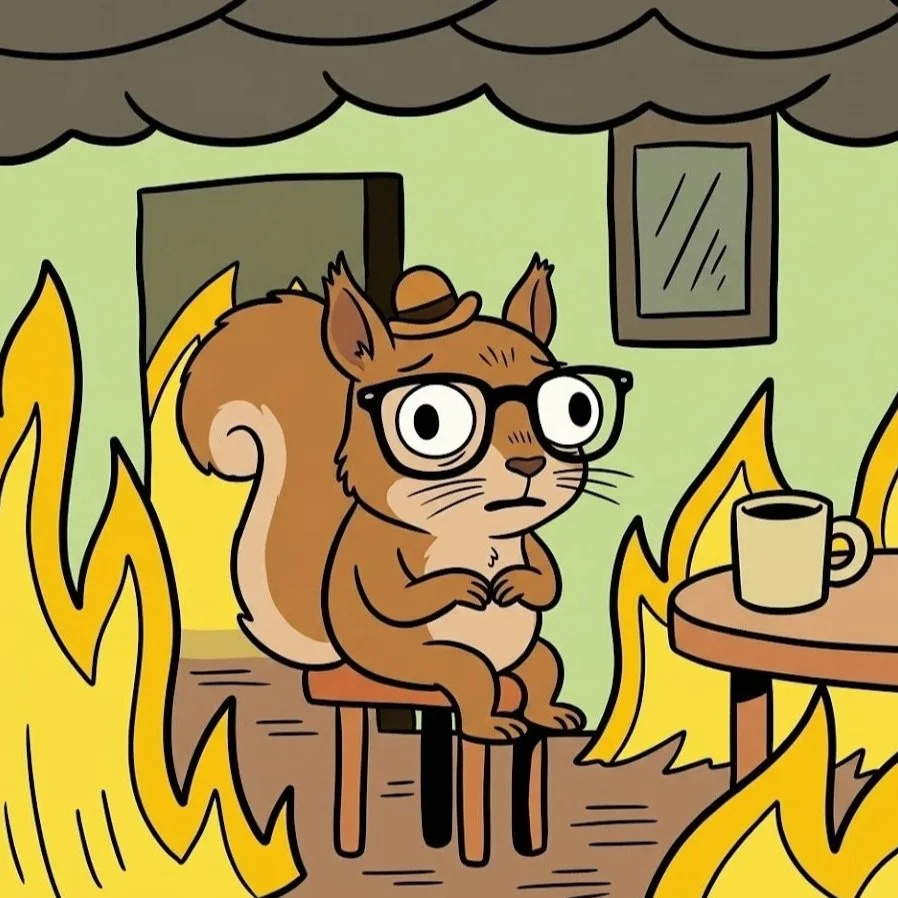
The House Fire Analogy: Urgency forces priority.
If you can’t see it, you can’t manage it. Dr. Tuckman and Dave discuss several "roadblocks" to help kick up awareness:
Externalize Everything: Use visible schedules and alarms. Don't rely on your internal clock.
The House Fire Analogy: When a house is on fire, you don't stop to organize the junk drawer. Urgency forces priority. We can simulate this by "clearing the decks" and making intentional decisions to not do certain things.
Inbox Bankruptcy: If your email is a source of constant "part-time pay" work, archive it all and start fresh. A hard reset is often the only way to gain "breathing room."
Dave’s Solopreneur Hacks for Wise Squirrels
Managing a business with ADHD requires specialized metrics. Dave shares two of his favorite systems:
The Dollar Sign Method: Prioritize your to-do list by marking tasks with one, two, or three dollar signs. This helps the ADHD brain see the tangible value of "boring" tasks like expense reports or follow-up emails.
The "7-7" Meetings Script: Dave uses a custom script to review the last 7 days and plan the next 7. This ensures that great networking meetings don't fall through the cracks of a sometimes forgetful noggin.
For more from Ari, check out our first interview and his guest article about productivity.
-
Dave: So, you know, I've been excited to to have you back. I think I can't remember if you're the first person to do two episodes on uh on the podcast,
Ari Tuckman: Whoa.
Dave: but uh welcome back. Um I was rereading your book again,
Ari Tuckman: All right.
Dave: which is just such a great uh playbook in a sense for for ADHD's really the the the productivi the ADHD productivity manual. Um which is fantastic.
Ari Tuckman: Awesome.
Dave: I actually just wrote a blog post kind of summarizing some thoughts on there too. Um so over Wise Squirrels so you can check it out later. Um, but I would love to really focus this conversation on time. The, you know, the the um I came up before Christmas. I do a good job at like creating things and then a poor job at like promoting them because I move on to something else. Uh, and so I designed all these like coffee mugs and t-shirts which are on this on the website. Um, but I I came up with a a a catchphrase for like a coffee mug and t-shirt and it's it's uh uh for Wise Squirrels, of course, but it's uh uh something I think it's time time is a b****.
Ari Tuckman: Nah.
Dave: Um and time is a b**** for for the best of us for regardless of our neurotypes.
00:08:40
Ari Tuckman: Yeah,
Dave: I think uh time can be a real pain in the butt. Um but uh let's talk about time like the
Ari Tuckman: indeed.
Dave: you know in the book you talk about different aspects of of course you cover a lot around time blindness and things but for those who are like late diagnosed you know Wise Squirrels listening and maybe they've just received a diagnosis and they're trying to get a handle of of life and kind
Ari Tuckman: Mhm.
Dave: of you know looking through the lens of of ADHD and and understanding their operating system. um what can you tell us about time uh for ADHDers and let's just dig in from
Ari Tuckman: Yeah. Well, so as you said, time is a b****, right?
Dave: there.
Ari Tuckman: And and it is for everybody, you know? So, number one, time is always a bit of a challenge. But I think it's especially a challenge or it's even more so, you know, bonus content a challenge when you have ADHD. Um, and especially when you have ADHD that isn't yet being well managed.
00:09:46
Ari Tuckman: And I sort of talk about that ADHD really really is about time like it is about doing things in relation to time and that ADHD affects your ability to both see time and feel the future. So what that means right we talk about kind of time blindness. I sort of say time can be slippery right just that sense of like where am I in the flow of time? How long is this going to take? How long have I been doing this thing? Um, how long until I have to do the next thing? Um, just that like navigating through all the different things, pulling at your attention at every single moment and trying to figure out what is the best thing for me to
Dave: Mhm.
Ari Tuckman: be doing now. Um, and best means not most interesting in this moment perhaps, but what's better for me later. Um, yeah.
Dave: Yeah.
Ari Tuckman: So, so there's the seeing time and then there's the feeling the future in that, you know, often folks with ADHD don't feel the deadline until it's a whole lot closer, which by the way tends to stress out people who feel the deadline earlier.
00:10:54
Ari Tuckman: Um, but you know,
Dave: Yeah.
Ari Tuckman: kind of my half joking unofficial slogan of ADHD time management is by the time you feel it, it's too late. as in,
Dave: Mhm.
Ari Tuckman: oh my god, taxes are due tomorrow, or oh my god,
Dave: Right.
Ari Tuckman: I have that big client meeting um in the morning and I don't have anything ready for it. So,
Dave: Yeah.
Ari Tuckman: so yeah, it's stressful and it makes life a lot
Dave: Do you feel that there are there are well maybe
Ari Tuckman: harder.
Dave: let's let's well first of all there's this line that I've been saying for the longest time and I read it somewhere I think it was like I can't remember but uh but the gist is that and for really for anyone but the gist is that um when you ref when you think too much of the past that can trigger anxiety right and if you think or excuse me, that can trigger depression because you you you're reflecting on the past,
Ari Tuckman: impression. Yeah,
00:11:51
Dave: right? And and in a negative way, of course. And if you think too much of the future, that can lead to anxiety and and and then so the the the trick is to be in the now,
Ari Tuckman: there
Dave: to be present. I'm a big proponent of mindfulness and meditation and things like that. However, you know, if you have a business, you need to look at like last year's earnings.
Ari Tuckman: Yeah.
Dave: You have to plan the year ahead.
Ari Tuckman: Yeah.
Dave: Of course, it's not to say you're not it's just, you know, being in looking at these these two different periods um in more of a positive manner. You know, the future, we none of us know what the future is. We don't have a crystal ball. And the past often are the stories we tell ourselves. Um, even after the call today, I'll have my interpretation of it just from like not not in a any critical way or anything like that,
Ari Tuckman: Where? Yeah.
Dave: but just kind of, you know, it was great catching up with Ari and and you'll have your own insight and and and take on it.
00:12:43
Dave: Um,
Ari Tuckman: Yeah.
Dave: so how can we focus more on that future in order to hit those goals and to stay on task and to manage our time better without triggering and I should also add and as I mean obviously I'm not the doctor,
Ari Tuckman: Sure.
Dave: right? Um, but with with ADHD, you know, anxiety and depression are like common coorbidities that come along. Not with not for everybody of course, but they're the I think the most common. Um, so let's say you have clinical anxiety or depression.
Ari Tuckman: Yeah.
Dave: How can you manage time better that
Ari Tuckman: Yeah.
Dave: way?
Ari Tuckman: So, you know, if all goes well in in the moment, we look back at the lessons of the past, right? What went well and why? What didn't go well and why? What might I do different or the same next time, right? We think into the future of like, well, what's up with this and what's up with that and what else is happening? And, you know, so ideally, um, you know, without overthinking every moment, but ideally, you know, we're looking backwards and forwards to figure out what to do right now.
00:13:49
Ari Tuckman: fingers crossed in as sort of reasonable and rational a way, right? So that means sometimes facing hard truths, but it also means not kind of beating ourselves up or fretting over things, making them out to be worse than they actually are. Right? That's the anxiety, right? Anxiety and depression lie to you. They tell you things are worse than they are. Um, and that is then not helpful because you're not using accurate information to make your next decision. The hard part with ADHD, especially again if it's been undiagnosed and not particularly well-managed, is that it kind of makes sense to be anxious and depressed, right? Because your track record isn't what you would like it to be. And honestly, you shouldn't be that optimistic about it being any different next time because why would it be, you know? Like,
Dave: Right.
Ari Tuckman: not to be too kind of cavalier about it, but like it totally makes sense. And also, this is why it makes such a profound difference to actually understand what's going on, to actually begin to use strategies and treatments and, you know, whatever that help you genuinely be more effective, right?
00:14:59
Ari Tuckman: And genuinely being more effective is a really good reason to feel less anxious and depressed. So, um, you know, so what it does then is it helps you,
Dave: Yeah.
Ari Tuckman: as you said, kind of be more present in the moment, right? You're not stuck in the past and you're not burning a lot of energy worrying about the future, but you're actually really thinking about it. you're applying your executive functions more effectively and you know making I don't know as good a decision as any of us can make given that we don't have full prediction of the future you know nor full understanding of the past.
Dave: Right.
Ari Tuckman: So um so yeah I mean we're all winging it a little bit but you don't want to feel like you're totally winging
Dave: Yeah. Yeah.
Ari Tuckman: it.
Dave: And as a business owner myself, you know, and and managing multiple different facets of the business and things and and often kind of juggling a little bit, I think and and even my clients and the people I talk to sometimes are struggle with knowing what to focus on, right?
00:16:00
Ari Tuckman: Yeah.
Dave: And and from a business perspective, obviously, or even a professional perspective,
Ari Tuckman: Yeah.
Dave: that's that's, you know, obviously business growth or excelling or higher revenue or whatever that is. Um, can you talk a little bit about that like to to maybe setting those goals but also like understanding the best practices to to stick to those goals or to pivot as
Ari Tuckman: Yeah, I mean it's, you know,
Dave: needed?
Ari Tuckman: life is hard in general because there's always more ideas than time. There's always more things pulling at us than energy to pursue or, you know, accomplish all of them. So, you know, we're all sort of juggling all these competing possibilities. And you know, if you work for yourself or if you're in a small business, there's always a bajillion things you could or feel like you should be doing, but there's still only 24 four hours in a day.
Dave: right?
Ari Tuckman: And you know, your family kind of likes it when you pay attention to them sometimes a little bit also. So,
00:16:57
Dave: Yeah.
Ari Tuckman: um, so it, you know, it does become a real challenge is how do you balance all of this out? How do you figure out what to do? And you know, as much as we make sort of specific decisions to do certain things, I think equally we need to make specific decisions also to not do things, right? as in I'm not replying to that email or here here's like a marketing idea and honestly I don't have it would be nice if I magically had 15 more hours it would be awesome but I don't so I am making a decision to let that go and with that hopefully trying to let go some of the expectation and the pressure of it um versus if you don't make real decisions then the end of the day decides for you know it's 7 p.m.
Dave: right?
Ari Tuckman: I guess I'm not doing it, you know. Um, but that means again like really getting your ADHD under control,
Dave: Yeah.
Ari Tuckman: really getting a sense of like I don't know, having your life a bit under control so you don't feel like you're always just barely hanging on by your
00:18:06
Dave: Yeah.
Ari Tuckman: fingernails.
Dave: And what are some of the steps to getting your life under control, you know?
Ari Tuckman: Yeah. I mean, some of it's about kind of managing your ADHD. So, like really educating yourself about it, figuring out what works for you, finding some good strategies. So, I don't know, like what's a good schedule system for me and how do I set reminders that work and just, you know, like tactical boots on the ground kind of stuff. It might mean, you know, getting on meds or tweaking your meds if they're not if your meds aren't great or if you don't feel good on them, like don't settle. Go back to your prescriber, you know, like let's get it as good as we can get it.
Dave: Damn.
Ari Tuckman: Um, so some of it's going to be that. Some of it is then going to be I don't know. It might mean some like clearing the decks,
Dave: Huh?
Ari Tuckman: you know, so you've got a little bit of breathing room to actually think about what you're doing.
00:18:59
Ari Tuckman: Um, and the thing of it is, you know, we all say, "Oh, I have to do all this stuff. I couldn't possibly." Right? And then like some life event happens, right? a parent gets sick or I don't know, hell, you slip on the ice and break your leg, god forbid, or some other thing and then you're like, well, that's going to go. I'm not doing that. We're letting that go. Right?
Dave: Yeah.
Ari Tuckman: Like we do have more flexibility than we think, but it might mean making some uncomfortable choices, facing a bit of other people's discomfort and the pressure they may put on you. But getting that breathing room to really think about what is going to serve you
Dave: Yeah. And in the book you talked of Yeah.
Ari Tuckman: well.
Dave: You mentioned I was smiling when you were saying that because you mentioned like the house fire, right? Like if there's a fire suddenly burning around you,
Ari Tuckman: Yeah. Yeah.
Dave: you're not going to sit there and be like, "Right.
00:19:50
Ari Tuckman: Right.
Dave: You're gonna spring into action."
Ari Tuckman: Right. Hold on.
Dave: Um,
Ari Tuckman: Let me organize the junk drawer before I grab my children and go running from the burning
Dave: right.
Ari Tuckman: building.
Dave: Right. Yeah.
Ari Tuckman: Oh, I got these emails.
Dave: Um,
Ari Tuckman: I gota gotta return them.
Dave: inbox zero,
Ari Tuckman: Got a couple text messages.
Dave: right? Do you ever like uh like I've done this a few times over the years,
Ari Tuckman: Yeah.
Dave: which is like I forget the term. It's like uh it's like it's something like inbox defeat or something like that or I can't remember the term, but it's basically like just archiving all domest Oh,
Ari Tuckman: Inbox inbox bankruptcy.
Dave: that's it.
Ari Tuckman: Yeah. Yeah.
Dave: Yes. Thank you. Bankruptcy. I don't know. Yeah.
Ari Tuckman: Yeah.
Dave: Uh but just like you know what, screw it. like just archive all your messages and or or you could even send a message to everybody
00:20:31
Ari Tuckman: Yeah.
Dave: saying, "Hey, if you've been waiting to hear from me, sorry about that. Let me know and I'll you know,
Ari Tuckman: Yeah.
Dave: I think I think that's just a good way to kind of put out that fire sometimes if you
Ari Tuckman: Yeah. I mean, yeah.
Dave: can.
Ari Tuckman: It's a drastic move, but there is a place for it, right? And the reason why I think we can justify it perhaps is what you're doing isn't working, right? Like you're not replying to stuff well. You're not hitting the top priority stuff and then working down in rank order, you know, because it's just too overwhelming. It's too much to keep track of emotionally. It just feels terrible. So, you know,
Dave: H.
Ari Tuckman: doing a bit of a hard reset it like there can be a place for it and maybe you don't just do a complete control delete, you know,
Dave: Yeah.
Ari Tuckman: but um but maybe you do a thing where you're like anything older than a week like I'm going to give it a really quick skim and if there's anything really urgent I'm going to address it, but anything that's not completely on fire, I'm just going to like archive all of it so it's searchable if I need it.
00:21:44
Ari Tuckman: And most things they'll email you again,
Dave: Yes.
Ari Tuckman: right? If it's really a thing, they'll email you again.
Dave: Yeah.
Ari Tuckman: And then you just politely say, "You know what? I've really been drowning in my inbox, but I've taken some some steps and I'm really going to try to stay more on top of it." Um, but then you need to actually do the stuff to stay on top of it, right? It's kind of like paying down your credit cards, but if you don't change your spending,
Dave: Yeah.
Ari Tuckman: then it just creeps back up. So, so it may be that the exploding inbox is not only a problem but also a symptom, right? So,
Dave: Mhm.
Ari Tuckman: what else needs to happen in order to actually have a manageable inbox? Does it mean you need to give it some real time every day or week or does it mean you got to cut down some other things that is sucking away your
Dave: Yeah.
Ari Tuckman: time?
Dave: And and you talk about like, you know, like understanding like if you're looking at your work, for example, like understanding how far in the future that thing is due and and then also like how specific are the consequences if you don't deliver, right?
00:22:52
Dave: Is there some sort of um playbook or graph or something that
Ari Tuckman: Yeah.
Dave: that or like a checklist or whatever that people can and I know it's different strokes for different folks and I also know
Ari Tuckman: Yeah.
Dave: once the novelty runs out then it's like back to the drawing board which is the curse one of the curses of ADHD
Ari Tuckman: Sure. Yeah.
Dave: for sure at least for me. Um,
Ari Tuckman: Yeah.
Dave: talk a little bit about strategies there to actually do that 30,000 foot view of all of the things that you know you need to be doing, but also like prioritizing those
Ari Tuckman: Yeah. So, you know, I sometimes think about like if someone if a client is talking about something that isn't getting done, I sort of break it up into is this a problem of planning, awareness, or motivation, right? Planning is, oh, I really need to work on this thing on Thursday because it's due on Friday, you know, so on Tuesday, you're thinking about what, you know, when to do it.
00:23:50
Ari Tuckman: Awareness is here. I am on Thursday. this would be that time like here's the time to prep for that meeting. Um, those are the easy part, right? And when people set alarms and stuff, that's what it's alarms help with planning and awareness, but they don't do anything for motivation, right? It's not like when the alarm beeps, you're like, "Oo boy, am I excited to work on that sales pitch." Um, so like often motivation is the harder hill to climb.
Dave: Right.
Ari Tuckman: Um, but so some of this is, you know, what are the things you can do to make your motivation a bit more likely? So, one of the things I often recommend is if you plan to do it earlier in the day, it's maybe more likely to happen, right? If you say, "I'll do it at 3 or 4," what are the odds that there aren't other things that are spilling through the three and the four and the five o'clock hours, you know? Um,
Dave: Yeah,
Ari Tuckman: but there's also an element of accepting the fact that you won't want to do it, right?
00:24:48
Ari Tuckman: Like, you're not going to want to. You won't like you will not it. It's hard.
Dave: sure.
Ari Tuckman: It might be boring. It might be confusing and frustrating. Instagram is absolutely more interesting and easier. Um, like that will never be a question. So, the thing of like, I don't really want to do it. You're not going to want to do it later either. So, sometimes we just accept the I don't like this.
Dave: Mhm.
Ari Tuckman: I wish I didn't have to. Try not to get caught on that loop because the more you complain about it, even to your even just inside your own head, the harder it is to get going. So, maybe it's sort of a bit of a both and. This sucks. I wish I didn't have to do it. And also, here I am. Open the file, take a look at it, just start reading through, scribble down a couple notes. Um, just like a little bit of some sort of emotion, right?
00:25:40
Dave: Yeah.
Ari Tuckman: Some sort of motion towards something better. And then really thinking about um well, and maybe getting rid of any interruptions and whatever, even though you would like them to happen. Um, but then really kind of thinking about like when I go into that meeting tomorrow, do I want to feel good? Do I want to feel confident? Do I want to walk in calmly because like, you know, I'm cool here or do I want to be racing in at the last minute, throwing stuff together, crossing my fingers, and hoping that nobody asks me about this because I have no idea what the hell the answer is,
Dave: Right. Right. Yeah.
Ari Tuckman: you know?
Dave: Yeah. Yeah. And I think um yeah, you mentioned some good stuff there too, like the it's interesting because so many entrepreneurs or solopreneurs, you know, including myself, you know, in order to to invest in growing your business often, you do have to turn to using like social media, for example, like Instagram. But in a sense also if you've dabbled in addiction um and I know with ADHD untreated at least we can we can be prone to to
00:26:44
Ari Tuckman: Yeah. Yeah.
Dave: addictions.
Ari Tuckman: Yep. The odds go up.
Dave: Um yeah so but in a sense like it's almost like
Ari Tuckman: Yep.
Dave: like for my for my own good it would be best not to use social media at all only because it's like the equivalent of like being like a a really serious alcoholic and being sober and then working at a bar. you know,
Ari Tuckman: Yeah.
Dave: you know,
Ari Tuckman: Right.
Dave: right?
Ari Tuckman: Yeah.
Dave: Becoming a bartender,
Ari Tuckman: Yeah.
Dave: it's like that's probably not the best thing, right? Um, so you talk about like bringing the future into the present um by like taking a moment to visualize how
Ari Tuckman: Yeah.
Dave: you'll feel uh in the future. talk a little bit about about how to do that because I think for myself I do struggle with uh imagining that future and also the past which we'll get to I guess next but like talking about uh celebrating the wins because I I win
Ari Tuckman: Sure.
00:27:37
Dave: I have a win and then I'm like okay what's the next thing I got to do for the the next win you know um so but yeah let's go to present first so like how can we how can we imagine that future
Ari Tuckman: Yeah. Yeah. So, I think that some of it is, you know, that sort of my line here is, you know, if you ask yourself, do I want to work on this now? It's the wrong question, right? Because like no, no, you don't like next question, please.
Dave: Yeah.
Ari Tuckman: You know? Um so rather it the better question is how will I feel about this later
Dave: Yeah.
Ari Tuckman: and ideally it's about going towards something good right and it could be like I said I want to walk into this thing feeling confident and you know on top of my game and you know I have a good rest of the day and I'll feel good that night and you know whatever right all the good stuff that comes of it.
Dave: Mhm.
00:28:30
Ari Tuckman: um a maybe a little bit of how much does it suck to feel unprepared? How much do I hate that? How awful is it? But the thing of it is I don't want it to be a motivation of I want to avoid a negative, right? Only avoiding negatives is not a good motivator. Um and I think this is where kind of the past can sort of cast a shadow on the future, which is I've tried this before. it doesn't usually work. I just, you know, I can't make it happen. I just need to sort of do what I can do. Right? This sort of defeist attitude. Um, and the problem is like if you're not on top of your game, whether it's your ADHD or your life, right? Whatever reasons, too much of your energy goes into avoiding the negatives and not enough goes into actually creating the good positives. You know what I mean? like the stuff that really makes life feel good.
Dave: Yeah.
00:29:28
Ari Tuckman: And I think feeling effective, feeling competent is a big part of that. Um, you know, of like feeling good about yourself. Um,
Dave: Mhm.
Ari Tuckman: I think also as a bonus points kind of a thing. Um, if you feel like generally you're on top of your stuff, if you feel pretty good about how you're handling things, it also gives you some credibility then to say no to some other stuff, right? You know, you're like, I could do the meeting,
Dave: Yeah,
Ari Tuckman: I can't do it at five. I I could do four. I can't like, sorry, man, I can't do five, you know, because I got to get home and remember what my children look like or whatever. So,
Dave: right.
Ari Tuckman: um, you know, but if you're feel like you're behind the eight-ball, it's too easy to feel like, "Ah, crap. I h this sucks and my spouse is going to be really pissed." But like, okay, sure. Yes, I will. I'll take the five o'clock meeting.
00:30:22
Ari Tuckman: Um, because, you know, again, you feel like you're barely hanging in there as it
Dave: Yeah.
Ari Tuckman: is.
Dave: Yeah. I used to do like a I had and I still bring this up from time to time, but I still do like a like I used to do a to-do list that I would like a template that I created and I and but it wasn't really that this is before I was diagnosed, but it wasn't really as effective until I had this idea. And this is more for business, you know, stuff, but I I created a box next to each next to the tick box where I would draw a dollar sign or two or three um to remind me that like, okay, this is a paying client, so they're a priority. Or this is like a potential speaking engagement. So that's going to earn money if if I close that that engagement,
Ari Tuckman: Huh?
Dave: for example. So, so just having those dollar signs on there just would trigger like would remind me like, okay, these are the priorities like from a Yeah.
00:31:18
Dave: Yes.
Ari Tuckman: Yeah.
Dave: Seeing the kids and and and my wife and everybody.
Ari Tuckman: Yeah. Yeah.
Dave: Yes. Absolutely. That so that's that's you putting that aside, but from a business perspective like what will even even right now like I've got a a sticky note on
Ari Tuckman: Yeah.
Dave: my monitor here that that says does it sell keynotes or coaching? Right.
Ari Tuckman: Yeah. Yeah.
Dave: It's right there below here.
Ari Tuckman: Like Yeah.
Dave: There's your proof.
Ari Tuckman: It's like that old Yeah. It's like that old uh Clinton thing.
Dave: You know,
Ari Tuckman: It's the economy stupid, right? Like,
Dave: yeah.
Ari Tuckman: you know. Yeah. Yeah. And I mean, I've had these conversations with clients about like,
Dave: Yeah.
Ari Tuckman: you know, what would your hourly rate be if you did this, right? So that could be something like, I don't know, gathering up receipts and submitting expense reports. You know, the money's been spent, so like that's gone.
00:32:08
Ari Tuckman: Sunk cost, but you know, it's sort of like,
Dave: Mhm.
Ari Tuckman: well, I've got about four grand in expenses. I guess it would take me about three hours to put it together. I was like, "Okay, so let me get this straight.
Dave: Mhm.
Ari Tuckman: You're making about $1,300 an hour. I I will do it for like send me the receipts. I'll I'll I'll do it for a thousand an hour. I'll cut you a deal." Uh,
Dave: Yeah. Yeah.
Ari Tuckman: you know, or you know,
Dave: Of
Ari Tuckman: whatever the thing is. And obviously life is about more than just money, but at least with like but money is a it's a tangible thing that can be easily measured.
Dave: course. And it's
Ari Tuckman: So like um Yeah.
Dave: important
Ari Tuckman: Yeah. So, you know, there is so sometimes that can be a way of helping the person see like, wow, this is definitely worth it. Um, and you know, and that then it is a win that like there it is, four grand, kaching hitting the bank account or at least it's out of my hands.
00:33:05
Ari Tuckman: I sent it to, you know, accounting and now it's their problem.
Dave: Right. Yes. The uh yes, I I uh yeah, I crave being able to delegate more things certainly. Um I don't know if we've even tal mentioned the word or maybe we did at the beginning something about working memory perhaps. Uh time blindness. Um what is time blindness?
Ari Tuckman: Mhm.
Dave: Do we know?
Ari Tuckman: Um yeah, I mean it's just so it's just sort of I mean obviously it's not completely blind to I think to be
Dave: Sure.
Ari Tuckman: completely blind to time you have to have like a serious brain injury but you know but rather it's
Dave: Yeah. He'd be in momento, right?
Ari Tuckman: just right right that exactly writing
Dave: He'd be tattooing your body to remind you,
Ari Tuckman: stuff on your hand. My name is Bob. Um so but rather it's just sort of like having more
Dave: right?
Ari Tuckman: difficulty kind of seeing time right seeing the passage of time seeing into the future you know so kind of like what's called best case scenario planning you know sort of minimizing or underestimating how long things take you know oh I could this report this is like an hour you know and like when all the stars align it is an hour right or as I sometimes joke.
00:34:21
Ari Tuckman: Hey, remember that one time it was an hour? Um,
Dave: Yes.
Ari Tuckman: you know, it's like, hey,
Dave: Yeah.
Ari Tuckman: remember that one time I drove into the city in 40 minutes and found a parking space right in front of where I needed to go? You know, it's like, yeah,
Dave: Yes.
Ari Tuckman: remember the 400 times that it was an hour and a half and you parked a mile away?
Dave: Right.
Ari Tuckman: Remember those?
Dave: Yeah.
Ari Tuckman: Um, so,
Dave: Yeah.
Ari Tuckman: um, I think the technical term for it is incautious optimism.
Dave: Okay.
Ari Tuckman: um which is a very kind of psych 101 kind of a term but um but yeah I mean it
Dave: Yeah.
Ari Tuckman: it so it's sort of a thing of like knowing that you underestimate and just going it's sort this is like a stupid example but it's sort of like it used to be when I would make chili and I'd put the hot you know powder in or whatever or the hot sauce I'd always be like that now that's not enough I I think it needs more um right and then by the time it cooks through and whatever.
00:35:17
Dave: Yeah.
Ari Tuckman: It's like too much, you know? So, I had to like do this thing where I'm like, that doesn't look like enough. And also, I need to call it quits here because otherwise it's not going to be
Dave: Yeah. My you Yeah. My my one of my best buddies here in Nashville,
Ari Tuckman: good.
Dave: like when we go out to eat together, he's always like fast on pouring salt on his food. I'm like, "Dude, you haven't even tried it yet." Like, yeah,
Ari Tuckman: Right.
Dave: like, hold on. You know, plus I mean, you want your heart to work for a while, I would hope.
Ari Tuckman: Right. Right.
Dave: But um
Ari Tuckman: Exactly. But it's a good example, right? Because it's it's just this automatic habit he has, right?
Dave: yeah.
Ari Tuckman: I think we all have these automatic habits. And maybe it's not salt, but maybe it's grabbing our phone and hitting a particular icon or whatever. Um, and it's kind of mindless, you know, like we don't pause to really think.
00:36:13
Ari Tuckman: Um, and I mean sometimes I'm not going to so habits habits can go either way, right? Like the good side is when you have something automated, you don't really have to think that much about it. That's good. Um, if it's something helpful, but you know, also it can be things that are not helpful. And then we need to set up some sort of a roadblock or something that at least kicks up a little bit of awareness of like, oh crap,
Dave: Yeah.
Ari Tuckman: right? Yeah. Don't uh don't do that
Dave: Yeah. Yeah.
Ari Tuckman: thing.
Dave: I sometimes think that like so many I mean I already like my spidey sense tells me a lot of creatives, a lot of artists um have ADHD whether they know it or not. And then like straight away like when we talk about time like I think about the lyrics to like Pink Floyd,
Ari Tuckman: All
Dave: Dark Side of the Moon, the song Time. It's like, oh, like, you know, time flies, you know, and it happens to everybody in life, but but you know, even Steve Miller band have a song about time.
00:36:59
Ari Tuckman: right.
Dave: Um, and it keeps slipping into the future. Um, uh, I this is a qu like I for the longest time and I've dabbled a little bit, but for the longest time I wanted to have and I know having ADHD like no two people with ADHD are the same. Obviously,
Ari Tuckman: Sure.
Dave: no anybody is the same. However, it is an acronym.
Ari Tuckman: Yeah.
Dave: It does stand for something. There are like three presentations uh and one type and so on. But um I sometimes wonder like especially since being diagnosed,
Ari Tuckman: Yeah.
Dave: you know, just a few years ago, like if this is life like through my eyes and my experiences both with and without diagnosis and knowledge of my ADHD, like what is it like to manage time for a neurotypical person? And I know it's a tough question because but do you have insights here?
Ari Tuckman: Yeah.
Dave: Do you have like do they is there some sort of magic that it's like oh damn I wish I could do that.
00:38:10
Ari Tuckman: Right.
Dave: I don't know like does time blindness I know everybody experiences time in similar
Ari Tuckman: Yeah.
Dave: ways and and it speeds up as you get older and and and because and I have theories about that um but
Ari Tuckman: Yeah.
Dave: anyway what are your thoughts on that?
Ari Tuckman: Yeah. I mean, so on the one hand,
Dave: It's a tough question.
Ari Tuckman: yeah, I mean, it is it's like, tell me what blue is, you know? Um, but but I think it's sort of a thing of like I mean, I think that there's stuff that we can do about it, right? I think that just there's sort of our inherent abilities, right? Some people just sort of inherently are better at like noticing how time passes of being aware of like where am I right now in the flow of time um and remembering in 20 minutes I need to call that guy back and then like lo and behold roughly 20 minutes later you know bing. Um so there there are the inherent abilities and I think that those are they just sort of are what they are.
00:39:10
Ari Tuckman: Um, you know, I think with ADHD, medication helps slow things down a little bit so time becomes a little bit more visible and
Dave: Yeah.
Ari Tuckman: more easily manageable. So like that that is a thing you can do. I think that there are certain things you can do to uh I'll say make time stand out more, right? So setting alarms and putting up, you know, having like a whiteboard or having like a real schedule that you're actually like checking and having a habit of every morning I look at my schedule. Or every time a meeting or something ends, I always look at my schedule to see what's coming next. Or maybe you write your schedule big and you put it like right in front of your face so it doesn't disappear, right? So making time stand out a bit more. Um I think also on the other side of it is quieting down the stuff that's going to suck you away, you know. So, you know, reducing,
Dave: Yeah.
Ari Tuckman: you know, having alarms for the stuff that's helpful, but getting rid of the alerts and notifications for things that are not helpful, you know,
00:40:19
Dave: Yeah.
Ari Tuckman: or things like I will not get on to YouTube during this part of the day because once I'm in, it's I easily lose track of time and I think I and then that's not helpful, right? And not helpful is defined as afterwards I regret and feel bad about what I did and
Dave: Yeah.
Ari Tuckman: possibly myself. So, you know, really trying to, you know, reduce the amount of stuff pulling at your attention so that you lose track of time. Um, reducing the stuff that you might get or not starting things that you'll get stuck in, right? Not starting things that are too hard to stop. Um, and just really being intentional beforehand about the situations you put yourself into.
Dave: Are there ways to um was I going to ask you about the the uh tracking of time like and and I I sometimes feel that it's almost like a it's not I don't think it's cognitive dissonance but maybe it is but like it the idea idea of like for example producing this podcast like it you know it takes you know we're spending an hour here chatting today um and I won't go into all the boring steps but you know I do have to edit and and promote and blah blah blah um
00:41:34
Ari Tuckman: Yeah,
Dave: so an episode takes a lot longer than there is a reason why I do an episode every two weeks at
Ari Tuckman: sure.
Dave: least right now instead of every week because I've done that before and it becomes too much um
Ari Tuckman: Yeah.
Dave: so but And I I was going to say with the cognitive dissonance piece or whatever that term might be and you
Ari Tuckman: Yeah.
Dave: can fill in the blank. Do you find with your clients and maybe I'm I'm speaking out loud here too about this but like there are strategies to track the time you're spending on whatever project.
Ari Tuckman: Sure.
Dave: Um, and maybe you could share some of those, but like if but there's almost like a denial, let's say, like I don't want I kind of know, but I don't want to know that I'm actually spending 10 hours a day or a week or whatever it is on the podcast. So, there's almost like a denial like I don't I don't want to I don't want to know. I don't want to know.
00:42:27
Ari Tuckman: Right.
Dave: Just like just do the work.
Ari Tuckman: Right.
Dave: Um, so I gave you kind of a lot there, but any any thoughts on a tracking time and b sort of that denial of
Ari Tuckman: Yeah.
Dave: time?
Ari Tuckman: I mean it is definitely a thing, right? because like you enjoy presumably you enjoy the the podcast,
Dave: I love
Ari Tuckman: you want to do it, right? You want to make it happen.
Dave: it.
Ari Tuckman: So, you know, when you're working on it, it doesn't feel like a chore, right? You're not pushing a rock uphill. Um, but it's also easy to get stuck spending more time on it, you know, than really fits into the rest of what you're trying to do. So,
Dave: Yeah.
Ari Tuckman: so I think it's sort of a thing of just really kind of being honest with yourself about like how much time am I spending? Is this really working well for me? Um, I remember Eric Tivers, who, you know, has had a podcast for a long time, talked about like as a musician, he could spend hour,
00:43:21
Dave: Yeah.
Ari Tuckman: he spent way too long editing the podcast, you know, like again with that musician's ear and he was like, "This is insane." And he gave it to someone else to edit because he's like, "I will make this so perfect that nobody else cares or or would hear it, you know?" So, you know, so like that is one strategy or to just say like I'm spending an hour and a
Dave: Yeah.
Ari Tuckman: half on editing. Like whatever I can do in an hour and a half, that's it. Countdown timer. Here we go. Um, and using that deadline pressure because otherwise, you know, you're going to be fiddling with like getting rid of a tiny pause or an um or a whatever that kind of like as they say like it's a difference without a difference, right? Like is it different? Sure. Does anyone give one s***? Not at all. Nobody else will hear it.
Dave: right?
Ari Tuckman: Even if they hear it, they don't care.
00:44:12
Ari Tuckman: Move on, you know.
Dave: Yeah.
Ari Tuckman: Um, but that also becomes an attention regulation thing, right? Of not getting hyperfocused in the moment of like, oo, I can make that slightly better. True. But also, is this the most important thing to be doing? and holding in mind at the same time the bigger picture of I can't spend four hours editing this like it is not a good use of my time. So, you know, so I think there's kind of that stuff, too. But it means knowing yourself and knowing where you tend to get stuck and then making some really honest and hard choices about how to not get
Dave: Are there strategies to track that time in the first place to like I mean editing a podcast or
Ari Tuckman: stuck.
Dave: whatever it is like what whatever the business is for this professional you know how how can they best manage not just man not just manage but monitor their time on a specific project and I guess step one without putting words in your mouth that I would say step one is committing a block of time to that thing rather than like you know off
00:45:16
Ari Tuckman: Sure.
Dave: to like you know I get like we say email all the time like you're working on your email but I don't know about you but most of the time when I'm working on my email that's going to take me to look something up and then go somewhere else and make a
Ari Tuckman: Right.
Dave: schedule and do this and that and then it's like an idea for a blog post and now I'm like working on my
Ari Tuckman: Yeah.
Dave: email and you know as I write a newsletter. Uh so yeah, how can we best track the time that we're spending in order to see if we're doing well or not
Ari Tuckman: Yeah. Yeah. I mean, some of it's as simple as just putting a stopwatch on it,
Dave: well?
Ari Tuckman: you know, um or scribbling down, you know, 317, that's when I started. Um, and you know, just trying to be intentional about it. But there is also something about like just the act of monitoring something, of paying attention to it tends to have some positive influence on it.
00:46:20
Ari Tuckman: So things like when people use their Apple Watch or their Fitbit to measure their sleep, you know, truthfully, all those devices don't really measure sleep and like all these sleep stages and scores are all kind of like extrapolated suit, you know,
Dave: Sure.
Ari Tuckman: they're definitely not as real as they are made out to be. But even if they're complete garbage, just the fact you're paying attention to your sleep means you're probably going to get better sleep. So,
Dave: Yeah.
Ari Tuckman: um, you know, but I do think just gathering some information, trying to be intentional about it. You don't have to be perfect, but you know, sort of pausing long enough to really sort of think about what am I doing here? Is this the best way to use my finite time and
Dave: And I found that like pausing I I have
Ari Tuckman: energy?
Dave: found practicing like meditation and mindfulness has been extremely
Ari Tuckman: Yeah.
Dave: helpful and and I really started taking that seriously in 2020 with a daily practice and wasn't diagnosed and
00:47:16
Ari Tuckman: Sure.
Dave: treated until 2023. So doing that ahead of time and quitting drinking also was helpful in 2020. So but leading up to three years before my actual diagnosis and treatment. Um so that I think that's really helpful.
Ari Tuckman: Yeah.
Dave: Are there other strategies or or variations of of that idea of being mindfully pausing long enough, whether it's breathing, whether something else to kind of recoup the the the the vision of the
Ari Tuckman: I think
Dave: time or the understanding of the time or to check
Ari Tuckman: yeah I mean I think that um you know
Dave: in.
Ari Tuckman: doing some sort of official mindfulness can be great on things like this but honestly even if you don't
Dave: Yeah.
Ari Tuckman: right you don't have to but just trying to sort of cultivate the habit of just
Dave: Thank you.
Ari Tuckman: like taking a beat you know before sort of jumping in and you know so I don't know like we you know I think I gave the example right before or every time I finish a meeting I'm going to look at my schedule right or whatever right and that's like an intentional moment but even if it's just a thing of like when I get home or when I get to my desk in the morning before I immediately jump into email or whatever I'm just going to take a sec and kind think
00:48:41
Ari Tuckman: about what my day is or I'll look at my schedule or if I finish one thing, let me take a sec and think about, okay, so what else? Like what do I got coming? Let me think before I act. Um,
Dave: before you move to something else,
Ari Tuckman: you know.
Dave: too. So, like you're writing,
Ari Tuckman: Yeah.
Dave: you're doing inbox zero for 30 minutes or an hour,
Ari Tuckman: Yeah.
Dave: you know, and you fall down and I start writing the blog post.
Ari Tuckman: Sure.
Dave: It's like, whoa, whoa, whoa, whoa. Back back to the email. Finish email.
Ari Tuckman: Yep.
Dave: We could work on that later.
Ari Tuckman: Yep.
Dave: Yeah.
Ari Tuckman: Absolutely.
Dave: Yeah.
Ari Tuckman: So, and again, you don't have to be perfect. You don't have to be a Zen master,
Dave: Right. Right.
Ari Tuckman: you know,
Dave: Right.
Ari Tuckman: because every little bit of this that you do makes your life a little bit better, you know, like there's very much incremental gains.
00:49:25
Dave: Yeah.
Ari Tuckman: It's not like all or
Dave: Yeah. Yeah.
Ari Tuckman: nothing.
Dave: Um I so I'm also being treated for anxiety and um when it comes to time management for example like you know the the sort of ADHD trope of like always being late for things. I've never been late for things in in 50 plus years before being diagnosed because I was always so I think partly because my dad was like super strict about it probably also
Ari Tuckman: Yeah.
Dave: ADHD but we'll never know. Um,
Ari Tuckman: Yeah.
Dave: but I um, so I would I when I have a meeting, I will always like if I'm going somewhere, I will always be I won't be rude and show up waiting in the office 20 minutes early or something, but I will be in the parking lot. You can bet. Um,
Ari Tuckman: Yeah.
Dave: like and and I'll walk in right on time and I'm kind of like,
Ari Tuckman: Yeah.
Dave: yeah, like boom. Oh, wow. You're right on time.
00:50:20
Dave: Look at that. Nine o'clock, Dave. Um, and I'm like, yeah.
Ari Tuckman: Right.
Dave: Uh, but do you think like part of that this is I I think arriving so early and things and just sitting in your car I I sometimes think of that as sort of like I don't know whether it's like a coping mechanisms or sort of like of like trying to get everywhere early and feeling anxious that I've got to leave because like I like if I have a meeting I I will be following Google Maps for hours before I have to leave in re like like I'm navigating traffic right
Ari Tuckman: Right. Yeah.
Dave: now to make sure that there's no traffic delays and and so I get anxious about
Ari Tuckman: Yeah.
Dave: making sure that I'm actually on time and I don't know if that's a obviously at the end of the day you want to be on time so I guess it's it's working but I don't
Ari Tuckman: Yeah. Yeah. I mean it.
Dave: know
Ari Tuckman: So I think that this is a good example of how anxiety can have a pro protective effect.
00:51:18
Ari Tuckman: I think maybe in general, but also, you know, particularly with ADHD, right? Because it for whatever reasons of how you grew up or how your brain is wired or whatever, but you know, being on time has been burned into you as this is really really important. Um, now the thing of it is not everything in life can be really really important. So, you know, I'm sure there's some other places, but but it works.
Dave: Yeah.
Ari Tuckman: Now, the question is like at what cost? So, if you're stressing the hell out of yourself, that may not be worth it. And maybe not all the time. Um, it isn't. But um but really trying to be intentional about it, being honest with yourself about, you know, watching watching the traffic, adding it a little bit extra because like it could be great the moment you're at your house, but all of a sudden halfway along an accident and now, you know, but also being honest about things like parking and you know, you need to actually walk from your car to the person's office, not you don't, you know, appear in their office.
00:52:19
Dave: Yeah.
Ari Tuckman: So, um, and then just finding other things to do and to factor that in, right? And I think that that means having like real deadlines of like I am walking out the door at 10:15. Not like, oh, I should be leaving around 10:15,
Dave: Yeah.
Ari Tuckman: meaning like, where are my shoes? Where are my keys? Oh, wait, what's the address again? Right?
Dave: Right.
Ari Tuckman: Meaning like hand on the door knob at 10:15.
Dave: Yeah. No, that's helpful. I've actually yeah I created something and anybody listening can email me and I'll send it to them or I think I might have wrote written a blog post about it but it's basically I call it 77 and it's like it's a little Google script that you run I just press a button in my browser I coded it um and it and it spits out it creates a Google doc that shows you the last seven the first se the seven meeting or the seven days of meetings in your Google calendar coming up this week from the day that you print it and it then it shows you the last seven days previously to remind you of like following up with people because sometimes you move on to the next thing.
00:53:28
Ari Tuckman: Oh, yeah. I like
Dave: So I created that as a little sort of script and and uh yeah I'm happy to to share that with
Ari Tuckman: that.
Dave: anyone who inquires they can uh reach
Ari Tuckman: I love the I love the past ones because I think you're right like that is such a common
Dave: out.
Ari Tuckman: pitfall, right? Great meeting.
Dave: Yeah.
Ari Tuckman: This is awesome. It was so good to talk. All right, cool.
Dave: Yeah.
Ari Tuckman: Poof. Right.
Dave: Yeah.
Ari Tuckman: Um,
Dave: And it happens. I mean like in my So I wrote a book over a decade ago called New Business Networking and and
Ari Tuckman: so
Dave: my sort of three core things about networking is to show up. Um that's where you meet people and network, right? Like not icky gross networking, but just like meeting people,
Ari Tuckman: yeah, yeah,
Dave: professionals,
Ari Tuckman: yeah,
Dave: whatever. So show up.
Ari Tuckman: yeah.
Dave: If you don't show up, you're not going to meet people and grow your network.
00:54:12
Ari Tuckman: Yep. Done.
Dave: Follow up. So follow up right after. I've got a stack of business cards on my desk for from an event yesterday that I'll be following up to later. But then setting it in my in my email and I have different ways to do this to catch up.
Ari Tuckman: Mhm.
Dave: And that means like for people that I want to like keep in touch with, I'll set reminders and things that like three months from now or six months from now or or for the
Ari Tuckman: Yeah.
Dave: conference that you're talking about like the ADHD conference,
Ari Tuckman: Yeah.
Dave: if you met there and you followed up after um for the people that you met there, then you know it's set for next December. So set a reminder to catch up with people that you met in like next November to check in and see,
Ari Tuckman: Yeah.
Dave: hey, are you going to the conference again? Let's plan to have dinner or whatever, right?
Ari Tuckman: Yeah.
Dave: So um
00:54:55
Ari Tuckman: But the thing about it is it like it's that you're actually being intentional like you're
Dave: yeah.
Ari Tuckman: actually putting it into your calendar because this thing of you know in November you
Dave: Yes.
Ari Tuckman: know nine months from now in the flow of a busy life sure I'll remember to what like no you never like that's not going to h right
Dave: Yeah.
Ari Tuckman: so it's that thing of being really honest being really intentional saying this is something that's important or at least is this important? Okay. Yes, actually it is. Now,
Dave: Yeah.
Ari Tuckman: I'm going to do something with it as if it were important, right? That if you don't put it into the schedule,
Dave: Right.
Ari Tuckman: it will not happen or somehow someway sort of capture
Dave: Yeah. And and also like like something else I do is like for speaking engagements,
Ari Tuckman: it.
Dave: if if a a prospective client for a speaking gig says, you know, oh, we're we have our keynote booked this year.
00:55:49
Dave: Um, I I will write back and say, "Well, when will you start looking again?" Next year. And they write back and say,
Ari Tuckman: Yeah.
Dave: "Well, we'll start looking July 1." I will write an email to that person then and there
Ari Tuckman: Yeah.
Dave: to say, "Hey, uh, you know, last time we we talked, we talked about me checking in in July,
Ari Tuckman: Yeah.
Dave: and I will literally schedule that email for July 1st or whatever date so that it automatically sends." And
Ari Tuckman: Yeah.
Dave: I've received I've had uh speaking engagements booked from that where the person writes back
Ari Tuckman: Yeah.
Dave: and says, "Oh my god,
Ari Tuckman: I believe it.
Dave: you're like I can't believe you checked back in right on time." And and you know, and if they write back and say, "We've been exchanging emails, Dave. Like, why did this message then?" And that's never happened,
Ari Tuckman: Right.
Dave: but if it does, you know, I'm prepared to spill the beans. I literally just did with you.
00:56:32
Dave: So, I know speaking of time management,
Ari Tuckman: Yeah.
Dave: uh we got to wrap this up. Um, how can and and I want to, you know, I always want to talk more, but um, how can people get a hold of you? How can they learn more about what you do and and and Yeah.
Ari Tuckman: Yeah.
Dave: and get your book?
Ari Tuckman: Yeah. Yeah. So, um I mean so the ADHD productivity manual is available all over the place, you know, print book, ebook, audio book. Um my website is drriman.com and um I'm on Instagram at Ari Tuckmansid. So Ari Tuckman psyd um on Instagram and I'm putting stuff up there now.
Dave: Mhm.
Ari Tuckman: So um yeah,
Dave: That's great.
Ari Tuckman: but this was great. I appreciate the opportunity to talk some shop here.
Dave: Yeah.
Ari Tuckman: It's always interesting.
Dave: Yeah. Thanks for thanks for joining me and I'll make sure to include links to everything at in the show notes. So, thanks Ari.
Ari Tuckman: Hey man, thanks. I appreciate you having me. Yeah. Yeah. Right.