ADHD was invented in the 1980s by big pharma…
Did that title get your attention? I wrote it that way on purpose, but in case you’re about to move on to something else, allow me to add one thing — it’s bullshit.
Pharmaceutical companies didn't invent ADHD in the 1980s, and the proof is in the writing. Two German and Scottish doctors show how far back ADHD was documented. These days, there’s evidence of ADHD in Paleolithic DNA from around 30 or 40,000 years ago, according to Dr. Stephen Faraone from my Wise Squirrels interview with him, but I digress…
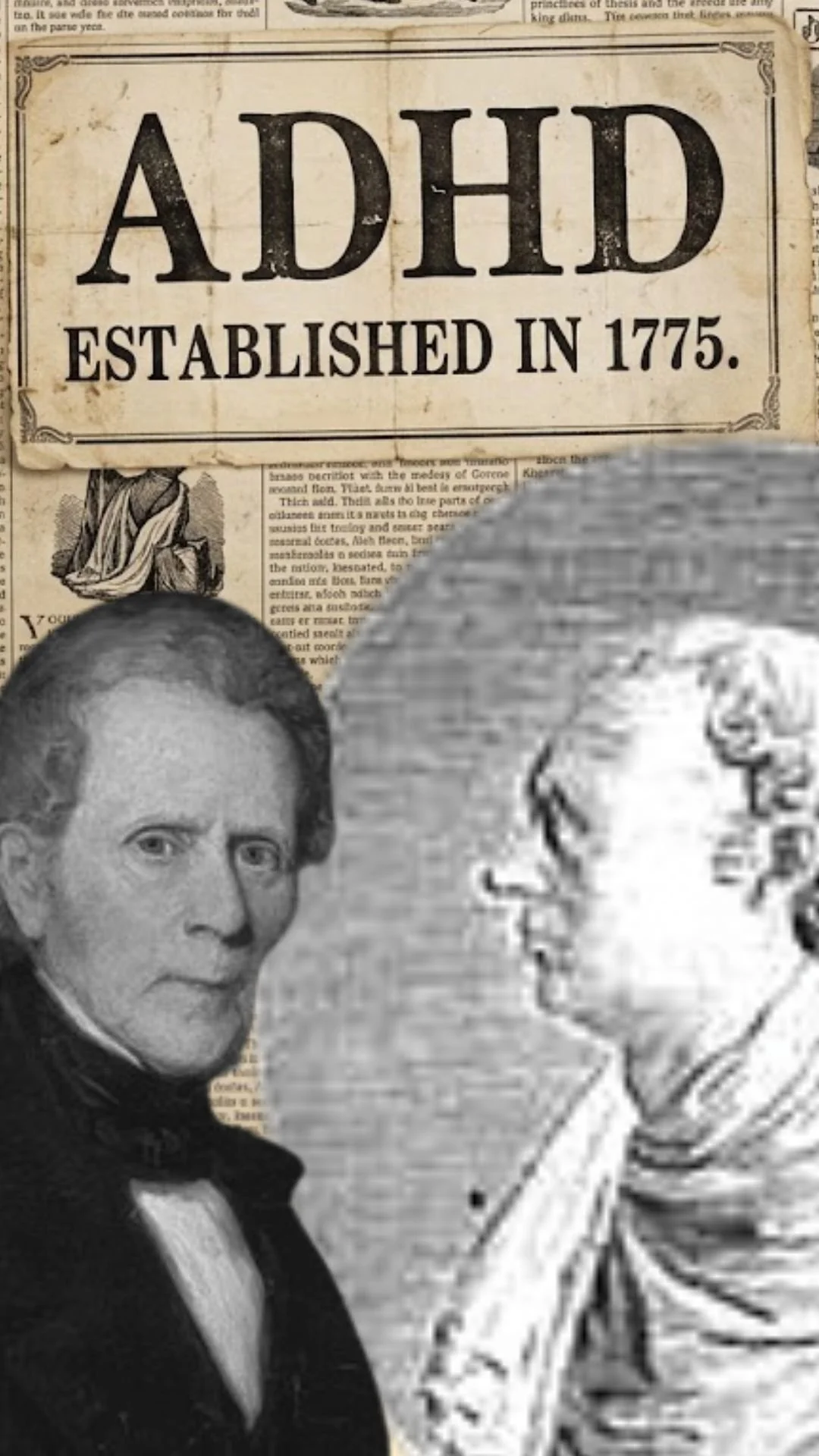
ADHD was first written about in 1775.
Dr. Melchior Adam Weikard was a German physician. In 1775, he was the first to write about what is now called Attention deficit hyperactivity disorder (not a great name, but what can you do?). In Der Philosophische Arzt ("The Philosophical Physician"), Weikard wrote a chapter titled "Mangel der Aufmerksamkeit, Attentio Volubilis" ("Lack of Attention / Attention Deficit").
Weikard described individuals who were easily distracted by extraneous sights and sounds, superficial in their focus, impulse-driven, and unable to sustain effort or complete tasks. This is recognized by medical historians as the earliest known documented description of ADHD symptoms in formal medical literature.
In 1798, ADHD appeared again.
Dr. Sir Alexander Crichton, a Scottish physician, described ADHD in 1798 in his publication, An Inquiry Into the Nature and Origin of Mental Derangement. I’m not thrilled about the whole derangement word, but I can’t fight the guy because he’s dead.
Crichton documented a state he termed "mental restlessness," describing it as "the incapacity of attending with a necessary degree of constancy to any one object". He noted that the condition often presents early in life, causes educational difficulties, and stems from heightened sensory distractibility rather than a lack of intelligence. At least he added the intelligence part because scientists have not found a relationship between IQ and ADHD.
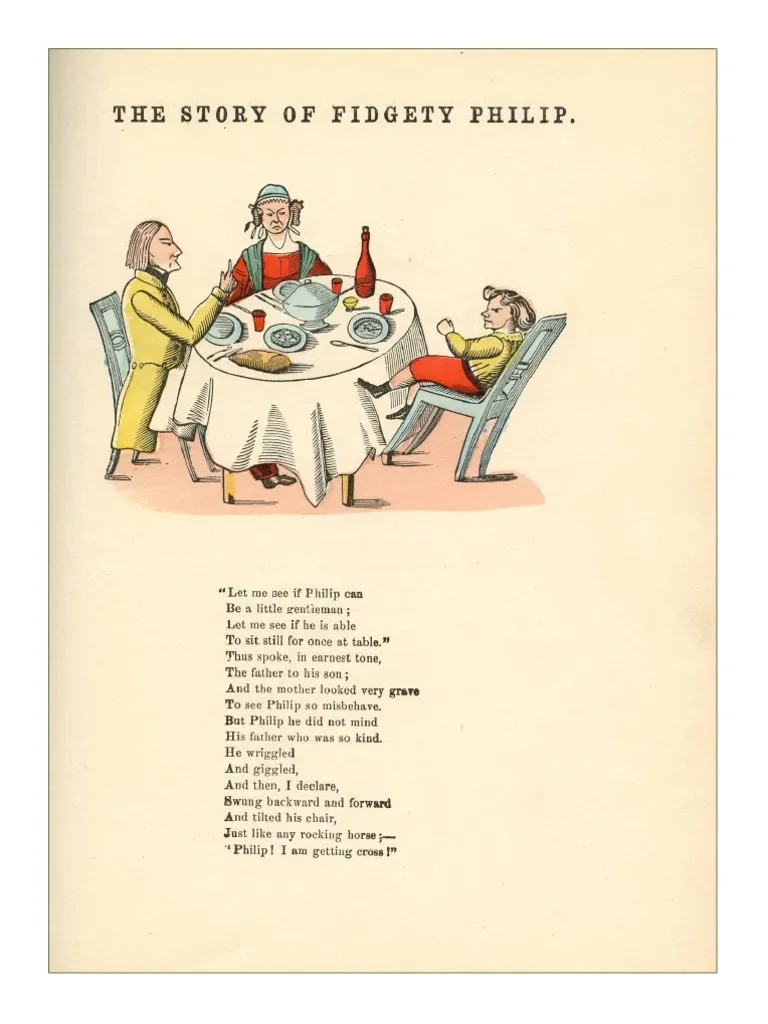
Fidgety Phillip, the boy with ADHD, in 1845.
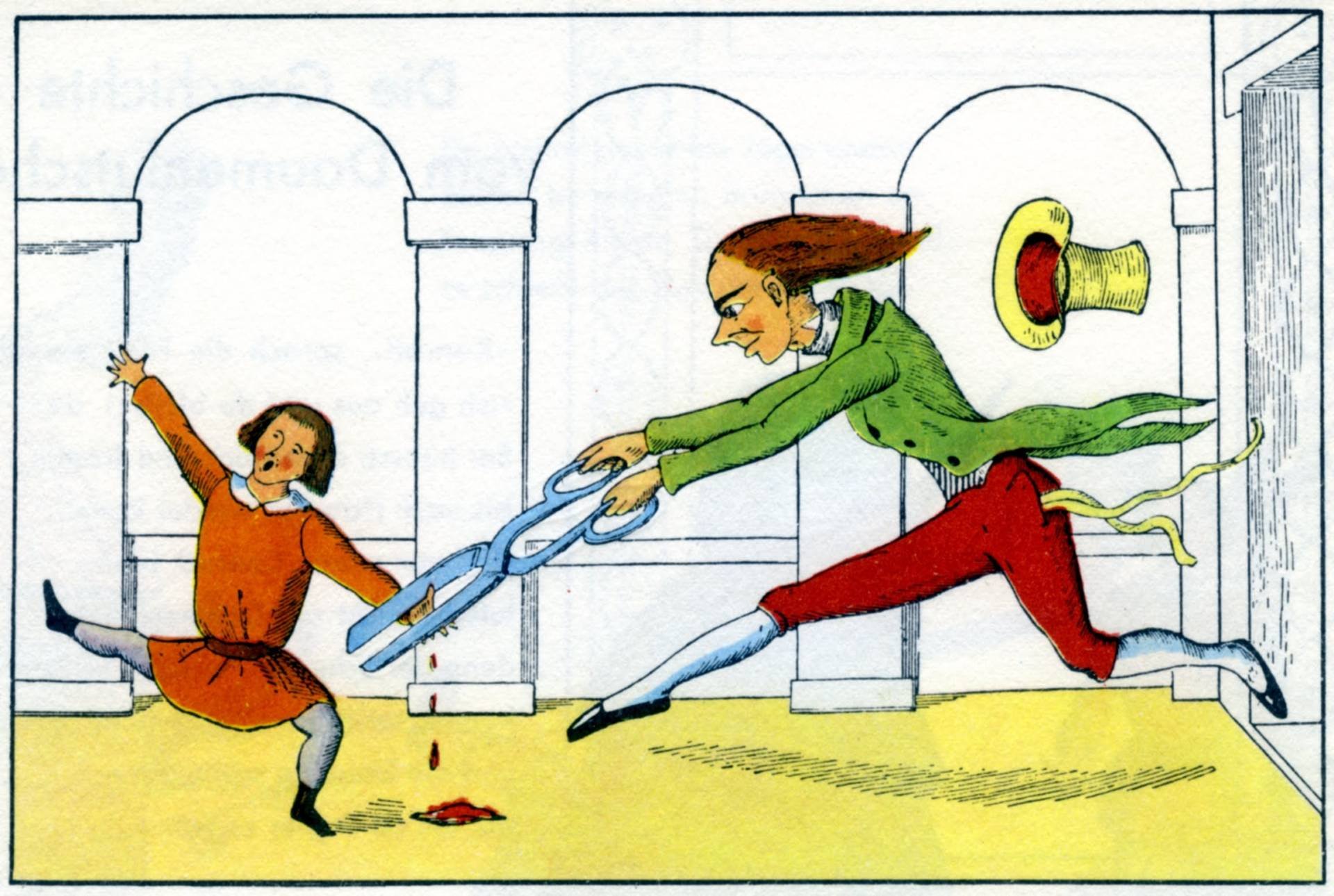
In 1845, Dr. Heinrich Hoffmann, a German physician, psychiatrist, and director of Frankfurt's municipal asylum, created a children's book featuring a character named Fidgety Phil, titled "Die Geschichte vom Zappel-Philipp".
According to the story, the good doctor couldn't find age-appropriate storybooks for his three-year-old son, so he wrote and illustrated a collection of cautionary tales titled Struwwelpeter ("Slovenly Peter").
My best friend’s German dad had a copy of Struwwelpeter when we were teenagers, and we laughed at its insanity. I think our favorite story was about a boy who wouldn’t stop sucking his thumb, so he was threatened that if he continued sticking his digit in his mouth, some monster would chop it off. Spoiler alert: it didn’t end well for the boy, and he was never able to hitchhike out of that godforsaken German village.
The Moral of the Story
So there you have it, friend. Next time you hear someone talking crap about ADHD and big pharma, send them here, or better yet, have them stick a thumb out, and they’ll never forget the truth about the history of ADHD or whatever they call it next.